

 Apple Podcasts
 Spotify
 iHeartRadio
 Podcast Addict
 Amazon Music
 Podchaser
 Castro
 Castbox
 PocketCasts
 Deezer
 PlayerFM
 Goodpods
  RSS Feed
 Hard or Soft Motorcycle Luggage? Discover the Best Choice for Your Ride!
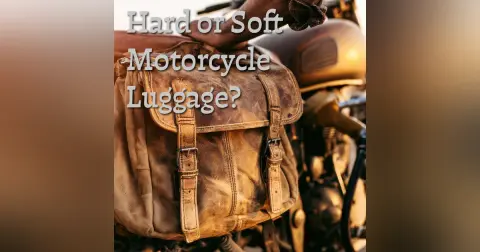
Choosing between hard or soft motorcycle luggage is a critical decision for riders, whether you’re planning a cross-country adventure or just need extra storage for daily commutes. The debate between these two options centers on several factors: weight, durability, protection, cost, convenience, and reusability. Both hard and soft motorcycle luggage have their own unique strengths and drawbacks, and understanding these will help you make the best choice for your riding style and needs.
Hard luggage, typically made from aluminum or durable plastics, offers robust protection against weather and theft. These cases are often lockable, keeping your gear safe from opportunistic thieves and shielding your valuables from rain and hail. However, hard luggage is usually heavier, adding significant weight to your bike and impacting the overall carrying capacity. This added mass can make handling more cumbersome and reduce payload for the gear you actually need to carry. Another consideration is crash durability: hard cases can withstand abrasion, but a strong impact may dent, crack, or even shatter the case, potentially requiring costly replacement.
On the other hand, soft motorcycle luggage is much lighter, often attaches with simple straps, and is generally more adaptable to different bikes. Soft bags excel in off-road situations, where their flexibility and shock-absorbing qualities reduce the risk of bag or rider damage during low-speed falls. While soft luggage is less expensive and typically easier to reuse across multiple bikes, it does not offer the same level of security or weather protection. Some soft bags feature waterproof liners, but this adds another step to packing, and they are more susceptible to theft due to their fabric construction.
Ultimately, the choice between hard or soft motorcycle luggage comes down to your priorities: if you value maximum protection and security, hard luggage may be best. If you want light weight, flexibility, and affordability, soft luggage is likely the better option. Consider your riding terrain, frequency of travel, and budget before making your decision.
Thanks for listening!
Click the "Send us a Text Message" link above to send us your questions, comments, and feedback on the show! Please make sure you leave the podcast title. Or if you prefer to leave an audio message, leave us a voicemail on our website!
Subscribe to our newsletter to keep up to date on the latest from the show.
Check out our favorite products to use on and off your motorcycle.
00:00 - Introduction
00:37 - Weight
02:23 - Crash durability
07:25 - Injuries from luggage
09:18 - Weather protection
10:39 - Theft protection
12:49 - Cost
13:59 - Reusability
16:47 - Convenience
19:01 - Width of the bike/lane filtering
20:16 - Wrap up
The soft overcomes the hard, and the weak, the strong. Welcome to the Throttle and Roast podcast. I'm your host, Niels Meersschaert. In today's episode, we'll go into the debate of hard versus soft luggage. While this originally started with the ADV crowd, it has spilled out into some other categories of bikes because of some of the advantages that people have found with soft luggage. We'll cover the pros and cons of each type of luggage, and which might be the right choice for you in which situation. So let's get started with weight. Now, if you remember from our episode where we talked about the gross vehicle weight rating, you'll notice that having heavy bags and heavy will actually make your bike have more weight and actually reduce your carrying capacity. And this is one of the biggest downsides of hard luggage. Hard luggage is heavy. As an example, a pair of aluminum panniers on an ADV bike might weigh 20 to 30 pounds just for the bags. Once you add in the mounting rack, it could be another 5 to 10 pounds. So you're adding as much as 40 pounds to your bike before you've actually put anything that you want to bring with you on the bike. And if you think about this, you've used a good portion of your payload just adding the bags to the bike. You're not carrying anything useful yet. So there is no useful load in those bags. They're just weight. Now soft luggage, on the other hand, is significantly lighter than hard luggage. Many bags are simply strapped to the bike. So there's no mounting rack to install. So they're automatically 5 to 10 pounds lighter just because you don't have a And then the bags themselves are also much lighter. A pair of bags to go on either side of the bike or even one of those horseshoe bags is a good quarter to maybe even a third of the weight of hard luggage. So soft bags could be more than 30 pounds lighter than an equivalent capacity set of hard luggage. now there are some soft luggage that mounts with a mounting rack similar to hard luggage. And because of this, the weight savings on those isn't quite as significant. and it might only be half the weight of hard luggage equivalent, but that's what, 20 pounds lighter than hard luggage. So there's definitely an advantage to these bags. And one of the other things will come into why some people do choose to use a soft luggage versus hard luggage really comes down to durability from a crash. This is one of the big concerns for ADV bikes. Since we often take these bikes off pavement where crashes are going to be a little bit more common, although they tend to be at low speeds, damage to the bags is a concern, though the same issue can apply to pavement crashes. Now most hard luggage is either aluminum or hard plastic, or even in some cases This does mean that in a crash, there isn't really absorption of the energy from that crash. Now one thing that does work to an advantage for hard luggage is because the bag is hard, it can often stand up to abrasion issues better than the soft luggage. So a fall on pavement with aluminum panniers might just result in a few scratches. Even a plastic or a fiberglass bag might just end up with scratches in the event of a fall, assuming that the energy of coming down wasn't so significant. It was more sliding energy that was creating an issue. Another thing that you'll find is with bags especially with hard bags specifically, is you might dent or bend an aluminum pannier even to the point where it won't close properly. And with plastic or fiberglass it's actually quite common for the bag simply to shatter or at the very least to crack in a crash. So some of this damage that can happen with hard bags means that one crash with hard luggage could require you to get replacements. And this can get expensive very, very quickly. Now between the two, I think the metal bags are often more durable, since they tend to bend rather than break. You might be able to bang the bag back into shape or if it's simply a dent or some scratches, simply keep it as a badge of honor, not a big deal. Now in the area where hard luggage really does help in a crash is because the bag is hard, it will generally absorb all the impact and the items inside are kept reasonably safe. Of course they could bang around inside of the bag, which could damage them, but whatever hard ground you hit won't push into your stuff in most cases. And this allows your items just to have a little bit more protection in there. And if you have some cushioning around the objects that are more fragile in the hard bag, you kind of have the best of both worlds. you've got that hard outer shell, and you've got the cushioning inside. So let's switch to soft bags and look at how they work within a durability issue from a crash. Now, the soft luggage means that it can absorb impact by default. And the fabric used could be a hard wearing material or even a waterproof exterior. the typical thing is that on soft luggage, when it's dragging, let's say a fall on pavement, is it can be quite abrasive. And just like your riding gear can wear from a crash, so can your soft luggage. It's not so much of an issue on soft terrain like off-road, but it is potentially an issue on pavement. Now, if we look at that same issue that we talked about with hard bags with dents or cracks and shattering, the soft exterior of soft luggage means that there really aren't any permanent dents. There's no cracks or shattering even possible. And any drop is often just absorbed by the bag. And if your contents are also soft like clothing, nothing really impacts. So the advantage one gets with soft luggage is that any sort of a drop or a fall pretty much doesn't do anything for the most part. As I said, the dragging on pavement is a different situation, but at least the drop, you're not going to have dents, you're not going to have cracks, you're not going to have shattering. This just doesn't happen with soft luggage. And because most of these drops result in no damage to a soft bag, the need to repair or replace them is far lower than a hard bag. And even if they have a lot of wear on pavement, like if you're crashing all of the time on pavement, first off, I'd say get some training. But secondly, they're really, the cost to replace them tends to be far less than a similar capacity hard bag. So just from a cost to replace perspective, soft bags have an advantage. now the last bit that I'll talk about when it comes to durability from a crash comes to your gear protection. In contrast to a hard bag, there is no hard protection of the contents of your bag with soft luggage. An impact, would continue to push through the soft exterior and crush the contents of the bag. It's not an issue for clothing, of course, but if you're carrying fragile camera equipment, for example, it could be a concern. So when we think of the overall for durability from a crash, there is no absolute one singular answer, whether it's hard luggage or soft I think overall, I would still probably give a little bit more of an edge to soft luggage simply because of the less likelihood of suffering damage. But it's, it's a trade-off So let's switch into another concern that people do look at when they are comparing hard and soft luggage. And this is injury potential from a crash. We talked about what's going to happen to the bags themselves, but what injuries to you as the rider? This is probably one of the things that hear quite often, specifically with ADV bikes, when it talks about the disadvantages of hard luggage. And there are many examples of people who crashed with hard luggage and their leg got caught under a hard pannier and was crushed by the weight of the bike and hard luggage. And I can certainly see that being a concern. And if your legs go way behind you in a crash, it would be possible. However, if your legs stay on the pegs, the hard bags could actually prevent an injury. Since they will keep the bike from falling over as far, you could create a window in which your leg could be under the bike, but the bag is holding the up a bit from hitting your leg. And in my experience with hard luggage, I've never really seen someone have their leg trapped under the panniers. But I have seen many times where the luggage kept the side of the bike off of their leg. And to me, this could go either way, either increasing or decreasing the chance of an injury. So I don't think it's absolute one way or the other. On the flip side, if we look at soft luggage, Crushing injuries if your leg gets caught under soft luggage is much lower, since the bag will absorb some impact, and thus transfer less force to your leg. And if the bag sticks out from the side of the bike enough, it could also keep the bike off of your leg, just like hard However, more often, the soft bags aren't as wide as hard bags. So, again, I think the injury perspective, while I think there's some legitimacy and there's going to be plenty of anecdotes of people talking about how their leg got crushed by hard luggage, I don't see this as really like an absolute one way versus the other as far as a concern for why you would choose over the other. Now, weather protection, this is something that I think a lot of people almost ignore when it comes to looking at their luggage, but it is something of a concern. When we're going and traveling, which is where we really want to have luggage on our bike, we don't know what kind of weather we're going to encounter. It could know, clear blue skies, you're just enjoying the day, or it could be just huge downpours of rain. And the thing is, hard luggage, just like your home's roof, it's going to protect your gear from the rain and other precipitation as well. If you get hail, for example, it's going to be well protected from that. The thing is that soft luggage, not all soft luggage is waterproof. So, it's possible for your gear to get wet. Now, some of the soft luggage manufacturers will actually include some waterproof or water-resistant outsides. And many of them even include a fully waterproof inner bag that you put your stuff into. So, if it does rain, your items are not going to soaked by all of the heavy rain. this is a little bit more of a pain in the ass, because now I've got to put my items into a small waterproof bag, and then put that small waterproof bag into my normal soft luggage. So, I think from a convenience perspective, hard luggage probably is easier when it comes to weather protection than soft luggage. But both of them could protect you. You just have to look at which specific bag you're looking to get. Now, another area where I think there's probably more of an argument can be made in favor of hard luggage is when it comes to theft protection. Hard bags, by definition, are harder to get into. They are not really going to be something that someone could just come by with a knife and just slice through and get your stuff. They've got to pick a lock. They've got to open up the bag. They've got to smash the bag. Whatever they've got to do in order to get into it, there is much more of a dissuading effect from hard luggage for Whereas, soft could be pretty easy for someone to reach and cut, or if they wanted to even take some more time, they can even just open up the bag because it's just a soft bag. There's probably a zipper or maybe a folding flap that they can get into the bag without any sort of a concern because there really isn't protection from it. Or, if they really wanted, they could remove the straps and just take the whole bag off of the bike very, very easily. Whereas, most hard tends to be locked to the bike. For example, on most of the ADV bikes, there's a key that is actually locking the clamp onto the motorcycle. Or, some bikes, it's really physically bolted to the bike. There's not really an easy or convenient way to get the bag off of the bike. I think from a theft perspective, soft luggage is a little bit more risky than you would have with hard luggage. And that's going to be one of the sort of pros, is if you're riding in, let's say, more of an urban environment, and you're going to be stopping and leaving your stuff on the bike, well, soft luggage is probably going to be more of a concern than hard luggage. And the thing is, you have to think about when you're doing this. When are you stopping and leaving your bike unattended? If you're pulling into, let's say, a hotel or something like that, you're probably bringing your bags into the hotel with you. That's the whole purpose. So, you're either stopping just for a moment, maybe for a meal, or just to use the restroom somewhere, or maybe you're getting gas. So, I don't think you have a huge exposure. So, just be aware of that this is the distinction. But, without a doubt, I think hard bags are going to have better theft protection. But, remember, it's just to slow down a thief. It's not going to absolutely prevent a thief from getting your stuff if they really want. Now, another thing that we'll think of for hard luggage versus soft luggage, it was when we come down to cost. Hard bags really just tend to be far more expensive than soft bags. A pair of aluminum panniers for a ADV bike might cost you more than a thousand dollars. They can be extraordinarily whereas you could get a soft bag for a couple of hundred dollars and maybe even less if you're just getting a small bag. the cost basis is significantly cheaper soft luggage than for hard luggage. When you also add in the fact that for hard luggage, you generally will also need to have a mount, well, the mount might be sold separately, you might need a mount that's specific to your motorcycle, well, that's going to cost you a little bit more to add on to the bike. And that cost is now part of what you need to consider for your overall luggage, whereas soft luggage, because it tends to be mounted with straps, means there's no additional mounting hardware that you need to buy in order to use with your bike. And there are some exceptions as I alluded to earlier, there are some soft luggage bags that actually do use hard mounts and hard mounting, so they actually can be a quick disconnect, where the cost really starts to become more of a long-term concern, is when we start thinking about reusability. And this is something where, really, when you compare a hard bag versus a soft bag, you really start to see a little bit of divergence in how they actually approach it. Because hard bags tend to be bike-specific, they're going to be piece of luggage that you're going to buy for that one specific model of motorcycle, and oftentimes for that one specific model year range of motorcycle. So if you decide to get rid of that bike in the future and get a different bike, the likelihood that you can reuse those bags onto the other motorcycle that you get is very, very small. When you add in that the bags are also more expensive than soft bags, effectively, your cost goes up because you can't reuse this across multiple bikes. It's just, it's a one-and-done for that specific motorcycle, which is why people will try to then, when they sell the bike, sell it with the luggage, hoping they can recoup some of the expense back in someone paying a little bit more for the bike, including the luggage. But realistically, it's a one-and-done. It's for that one specific bike. An advantage of a soft bag, of course, is that because they tend to be attached with straps, they can generally adapted to most any motorcycle. Now, I have Kriega US Dry Bags that I've used on seven different motorcycles over the past 15 years. These are some of the best bang-for-buck bags I have ever owned. And this is one of the biggest advantages over hard bags is a soft bag doesn't care what bike it's on. It can be used anywhere, kind of just like a backpack. A backpack, of course, is mounting to you, so it's irrelevant which motorcycle it's on. Well, soft bags kind of are the same thing, but they mount onto the motorcycle. But because of the incredible amount of flexibility that you have with being able to reuse them across other bikes, concern is less so. Now, when we talk about some of those hybrid bags, these ones that have the mounts that you put onto the motorcycle so that they can do a quick disconnect, these kind of split the difference a little bit because you could reuse the bags, but now you have to buy new mounts for the new motorcycle and install them in order to use your bags with it's not always absolute, but if we think of the most simple soft bag versus the most typical hard bag, soft bags in general have far more reusability. So if you're hearing a bit of a theme here, you're seeing that essentially soft bags in general will less expensive and more reusable than a hard bag. They might have some advantages when it comes to off-road. They're going to also certainly have less of an impact on your available payload than you would have with a hard bag. But they give up also a little bit on some of the theft protection. you But one thing, and this is why I think some maybe go too far on the extreme of saying you must use a soft bag and forget about hard bags whatsoever, is we have to remember about the ease of attachment and removal. And most hard bags that are not already installed on the bike from the factory, so think of things like, you know, some of the Harley big touring bikes that have the panniers and the top case already mounted on the bike from the factory, those tend to be of permanently attached. You're not really removing them. But a lot of them, if you were to, for example, look at some of the adventure bikes where you're mounting the aluminum panniers, generally those can just be, you know, you undo a quick clamp and the bag just fully lifts off. Or many of the plastic bags that you attach, they have a quick handle that you pop up, and now you can take the bag off in a handful of seconds. It's super, super convenient and easy to do. Most of the time, this is done in less than a minute and makes it very convenient if you wanted to even just take the bag off. Because many of these bags also have handles on them, certainly on the plastic bags. So think of things you'll see on some of the BMW motorcycles, for example, those hard plastic bags. They tend to have a little handle that pops up. You can now carry your luggage into wherever you're going, your hotel, let's say, and you've just popped them off the bike in seconds. It's super easy and you just carry the bag into where you're Now soft bags, on the other hand, are not quite as convenient. You know, it might take you 5, 10, maybe even 15 minutes to get the soft bag fully attached and adjusted and make sure that everything is strapped down well. It's not going to shift excessively on the motorcycle while you're riding. And if you were now trying to remove the bag when you've gotten to a place, it's going to again, take a little bit more time to remove and undo all those straps and get it ready to go. So it's not quite as convenient for quick attach and quick release. And then I think this is why some of the soft bags now have those quick release setups is to kind of take some of that advantage that hard bags have for convenience and bring them into soft bags. So you can kind of get the payload advantages of the soft bag, but still have the convenience of quick attachment and release as you have with these. Now, another area that we have to sort of realistically look at with a hard bag versus a soft bag hard bags will in general have a physical shape that is almost square in nature. Certainly with aluminum panniers, that's tend to be quite common, but even other hard bags that you might see on, let's say like a Harley or an Indian or any other bag that has really, really hard. So that's, they tend to be fairly straight lines when it comes to their spacing. And because of the mounting hardware is also pushing the bags further away from the motorcycle, they tend to be quite wide. And And soft bags don't necessarily have this because the bag itself is just right onto the motorcycle. They don't have this mounting hardware, pushing it out two, three, four or five It makes it significantly narrower that the bike would be with soft bags. Then with hard bags. Now, if you're in a jurisdiction, which allows lane filtering, this could be making the difference between you being stuck in traffic when you're going on your trip, or you can squeeze past the delays and make up good time. So this might be another reason why you might consider soft bags versus hard bags is just for ability to squeeze through. So let's wrap up. We covered some of the pros and cons of hard and soft luggage. We looked at weight, crash durability, injury protection, weather and theft protection, purchase costs, reusability, and even the ease of attachment and removal. Plus the width of the bike allowing you to easily get through and filter if you have soft bags versus the hard bags. So my question for this week is what type of luggage is your favorite and why? Share your thoughts through the text to show link in the show notes or leave a voicemail at ThrottleAndRoast.com/voicemail. Thanks for listening. I'll talk to you next week.
