

 Apple Podcasts

 Spotify

 iHeartRadio

 Podcast Addict

 Amazon Music

 Podchaser

 Castro

 Castbox

 PocketCasts

 Deezer

 PlayerFM

 Goodpods
 RSS Feed
Overcoming Mental Obstacles of Solo Motorcycling: Mindset Shifts for Confident Riding
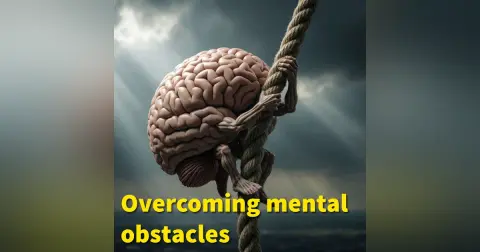
Overcoming mental obstacles is a crucial part of solo motorcycling, as discussed in this episode of the Throttle and Roast podcast. Riding alone amplifies doubts, anxiety, and feelings of isolation because there’s no group to share the mental load or offer reassurance. The episode begins by exploring how these mental barriers often stem from our own minds and require proactive mindset shifts to overcome.
One common obstacle is the constant barrage of "what if" scenarios—worrying about mechanical issues, remote stretches of road, or other worst-case outcomes. The host suggests transforming this anxiety into a plan of action: verify your emergency gear before every ride and know exactly what steps you’d take if trouble arises. This approach turns vague worry into structured problem-solving.
Another challenge is dealing with intrusive thoughts, especially during long, monotonous rides on highways where boredom can let anxieties creep in. To counter this, the episode recommends anchoring your attention to the physical sensations of riding: feel the engine’s vibrations, notice your boots on the pegs, and scan the horizon for distinct colors. This mindfulness practice brings you back to the present and breaks the cycle of negative thinking.
The episode also addresses imposter syndrome that can arise when tackling unfamiliar terrain or technical challenges. Rather than focusing on the daunting length of the journey ahead, break it down into small, achievable milestones—like reaching the next gas station or mile marker. This makes the overall task more manageable and helps build confidence.
Finally, solo riders must manage their own pacing and resist the urge to overexert themselves without the group’s natural breaks. The host suggests setting rigid rules for rest stops—such as every 100 miles or two hours—to prevent fatigue and cognitive lapses.
By planning ahead, setting boundaries, and practicing radical acceptance that things may go wrong, riders can better prepare mentally for solo adventures. The episode encourages listeners to reflect on their own experiences and share the toughest mental obstacles they’ve overcome while riding solo.
Related episodes
Thanks for listening!
Click the "Send us a Text Message" link above to send us your questions, comments, and feedback on the show! Please make sure you leave the podcast title. Or if you prefer to leave an audio message, leave us a voicemail on our website!
Subscribe to our newsletter to keep up to date on the latest from the show.
Check out our favorite products to use on and off your motorcycle.
Sometimes carrying on, just carrying on is the superhuman achievement. Welcome to the Throttle and Roast podcast. I'm your host, Niels Meersschaert. in today's episode, I'm going to cover the mental obstacles of solo motorcycling. Overcoming them requires shifting your mindset from fear-based reactivity to structured, proactive problem-solving. And when you ride alone, the brain naturally amplifies doubts, isolation, and anxiety because it lacks the comforting buffer of a group. And I'll share some approaches to diminish these challenges. So I do want to highlight that we have covered some aspects of this in some earlier episodes, really kind of looking at the solo versus the group riding dynamic, and I'll put a link to that episode in the show as well as how, when you're riding by really get into a mindfulness and a flow state as you're riding. And I think those are sort of more on the positive aspects. And what I really want to focus on in this episode are some of the obstacles that we really try to when you're riding on your own. And overcoming these mental obstacles of solo motorcycling just requires us to sort of just really imagine it a little differently than you would when you were riding in a In a group, kind of give up a little bit of the brain power to the group, or more specifically to the leader. And so you don't have to kind of concentrate quite as fully as you would on your own. And as a consequence of this, one thing that some riders will have as they're riding on their own is this minor mechanical noise or being in a remote stretch of a road can a little bit of a spiral of worst case scenarios or a what if scenario is going on in your mind. And because of this just constant what if, it's making it harder for you to continue on. You're you're really focusing on the negative and the what if possibilities. So how can we possibly resolve this what if scenario for us? How do how do we reimagine our mind to help us through these little bit of a challenge? the problem with you know, one of the things I've often sort of try to do on my own life worrying is wasted energy. What you really want to focus on is what can you actually do about before you start your engine, visually and mentally verify your backups, you know, point to your satellite communicator, your tire plug kit, your emergency roadside membership, knowing exactly what step you'll take if any sort of a negative scenario occurs converts this anxiety that you might feel into more of a plan of attack of how you might resolve it. this mindset shift essentially an anxiety or a worry into really like, what can I do about it is really the way to resolve that sort obstacle that you may face as you're riding on your own. Now, another one that you can run into, and this is personally for me, why I, I tend not to love the highway riding because I do find it kind of boring and monotonous. And this is where you have to sort of push through this intrusive thought wall that you might run into. And it's very common to happen on these long monotonous straightaways that you'll find on highways. So as the twisties fade, your mind sort of fills the silence with these anxieties and regrets or an existential dread, just something to fill the lack of action that is happening in front of you. And this is personally for me, why I prefer, even if it's a long trip, like I've done four or 500 mile days on back roads and I love it because it's just far more engaging mentally. But if you do get into this point where you are stuck a rather boring straightaway road, it's sort of, you just deep into your thoughts. Well, the first thing I say again is get off the highway. There are far more fun roads out there, but sometimes you might be strapped for time and you have to resort to a highway just to make the time. And I get that. That's fine. But one of the things you can do is really how can you ground your senses instead of fighting thoughts that you may have, anchor yourself back to the machine. focus on the sensation of your boots on the the rhythm of the engine vibrations, the scanning the horizon for three distinct colors, you know, just pick out something that you're looking for, get something that is making your a bit more active. Yeah. And you're breaking this sort of default mode where, since you don't have anything really to do because it doesn't take a lot of focus to sort of just ride along a straight highway, well, making it so that your brain is focusing on something that's an active breaks this sort of natural worry cycle that you can get into, and it brings you back into this active presence that you'll be in the moment. And this is where I think again, why I still say I prefer the backroads for that is because then you don't really have the opportunity for this to even rear up its ugly head. But if you do have to be stuck on the then this is a way in which you can do it. So another obstacle you might face is really where you feel you have to combat this almost imposter syndrome of remote spaces. And as Shakespeare said about the the undiscovered country from who's born no traveler returns puzzles the and makes us rather bear those ills we have than fly to others that we know not of. So entering into a remote, unfamiliar, or technically difficult terrain can trigger an immediate urge to turn back and making you feel like you don't belong there or you aren't skilled enough in this imposter mindset and this imposter mindset that pops up of you don't belong there for some it's because of this unfamiliarity that you have with that experience. And I'm always a big fan of pushing yourself into new unexpected experiences because that's the only way that you really learn. But when you do get this, really think about shrinking your timeline because part of the sort of the mental problem that happens with people as they're getting into this situation is they start thinking of, well, how do I get through this? And I've still got 200 miles to Well, don't think about the 200 miles that are left in your day. Think about small goals. Think about, Hey, how do I get to the next mile marker? How do I get to the next gas station? How do I get to the next curve? And hitting these little small milestones, it gives you a little bit of a continuous dopamine hit because you're always getting that sort of you've achieved a goal. it makes it where this seemingly impossible or at least unfamiliar task now becomes more manageable, bite-sized pieces that you are more familiar with. And this transition of the big unknown into a series of smaller knowns just makes it a lot easier for you. So really focus on shrinking down what you're thinking of that timeline. Think of the little achievable goals that you can do. And now all of a sudden this overwhelming agita that you might face about, Hey, this new experience Starts to disappear. Another one that you can run into is what I'll kind of describe as almost resisting an ego and pacing fatigue. Without a group setting the pace, riders often over-exert themselves to make good time, which leads to cognitive failure, slowed reaction times, and often poor decision-making, which can result, of course, in a crash. Think of the scenario of you have now almost a no longer a just you're along for the ride like you might be in a group situation, but you are accountable for it. You are responsible for it, which means you are responsible for whatever pace you want to do. what I found is really helpful is really kind of having a very almost rigid non-negotiable cognitive halting rule. So check in with yourself every like, you know, 30, 60, 90 minutes, whatever works for you. And if you miss a turn, you fumble a downshift twice, maybe you catch yourself staring blankly at the road ahead. Your brain is fatigued. So kind of force a mandatory 10-minute break, you know, pull over to the side of the road, pull in the gas station, whatever's a safe place for you to pull over, and just get off the bike. Walk around for a few minutes. Just take that mental break so that you can just sort of reset. Because if you're focusing at such an intense level on your own for so long, and there's no external, you don't have a group who's saying, hey, let's take a break now, or hey, I got to use the restroom or whatever, That's kind of like an external... Click for you to then force a break, the only one who's gonna force the break is yourself, so you really have to be mindful of thinking about this. And this is why my sort of hard, fast rule I stop every two hours or 100 miles, whichever comes first, no matter what. It's, that's just, I'm going to stop at that point. It doesn't mean I won't stop earlier than that, but I'm definitely stopping in that sort of an interval. And it just makes it so that I know that I will absolutely have that mental break, have a moment to even just have a physical break as well, just to stretch, get loose off of the and just do something a little different than whatever I have been doing for the past two hours at this point. So these are some of the, really the obstacles I think that you can face as you're riding solo. And there's a really, these are mental obstacles that I'm describing here. These aren't physical. I'm not talking about, Hey, you got a flat or, you know, the road was closed. Obviously those are things that we have to deal with. And certainly when you're riding on your own, they are going to have their own aspect of challenge to These are obstacles that are really internal. They're things that you are creating in your own because of the experience. And so hopefully I've given you a few ways in which you can tackle Now, the other thing I want to focus on for this episode is a little bit of planning. How do head out on a solo ride so that you prevent some of these obstacles from even occurring? And especially if you're going out on a ride, which could be mentally taxing, maybe it's a really long ride, or it's a ride that you're going along a route that you've never gone before, or it's a route that you unfamiliar with in some way. Anything of these is going to make it more of a mentally taxing situation. So the first thing is let's have a objective assessment. And I think this is good, no matter what the ride is, if you're just going out, even for like, oh, I'm going to ride for an hour. It's fine. Still do this little assessment and ask yourself, am I riding today to escape a negative or to pursue a positive experience? when you're riding angry or you're really deeply distracted, it does increase risk. So you have to be mindful of that. That is going create a problem for you just from a mental perspective of how you will be able to successfully navigate your ride. while riding can clear your head, and I'm a big advocate for that. Sometimes the intention of how you're going to clear your head makes all the difference. So am I riding because I'm mad or am I riding because I want to stop being mad? Those are very different in terms of your intention. And if you're riding because you're and you're hoping that it will kind of do this rather than saying I'm going to not be mad anymore because I'm out on my are very different just intentions that you're setting for yourself. think of that as you're planning for whatever ride you're going out to do will really help you of ensuring that you're going to have just the right mental attitude as you're getting out on the bike. The next thing is really about this boundary setting. So what are my hard cutoff conditions for today? As I said, I have that two hour 100 miles and that's just that's just a rule of thumb no matter what. But I might have on a particular day, maybe I'm not feeling 100%. And maybe I say, well, you know what? I'm going to stop every hour, every 50 miles or every 30 minutes, whatever it is. Set a boundary that makes sense for you for that day. and it could be things like if it starts raining after dusk, I'm going to pull into a motel immediately. No exceptions. So think of these guidelines that can help you just really set that up in advance before you get out on the bike rather than going along. It could even be something as simple as, hey, if I catch myself being distracted three times, I'm done for the day. Or at least I'm going to take a good hour long break. Whatever the boundary is that makes sense for you, just make sure that you set that each and every time that you're getting out onto the bike. And the next planning bit that I'd say is really I'd describe it as almost a radical acceptance. it's a mindset as you're going out onto the bike of just saying, I accept that things may go wrong. And I trust that my capability to solve them step by step will happen. Everything in life is going to be a bit of a crapshoot. Something can always go wrong. sometimes adventure is even part of the ride. You never talk about those rides where nothing happened. But the stories about how you overcame are the ones that you might regale for years to come. So understand that things may go wrong. It's just that you're prepared for how to handle them when they do. So let's wrap up. We covered a few different mental obstacles that you might run into on the motorcycle. You might hit into a what if where your mind starts wandering about all of these possible things that could go wrong. Or maybe you're trying to push through this intrusive thought wall. You are riding along a relatively monotonous road. And now all of your thoughts, whatever was going on in your life, start eking back into your thoughts. And it's intruding into your experience and probably distracting you. We've also talked about the almost imposter syndrome that happens as you get into some sort of a novel experience. Maybe it's a new remote area. Maybe it's a place you've never been before. Maybe it's a style of riding that you've never done before. And this feeling that you don't belong can be a part of it. And finally, we talked about some of the ego and pacing fatigue of where this might actually be. You're pushing yourself a little bit harder because you're on your own. Then you really can sustain. So how do you manage that in a way that is achievable? Let me talk about some ways that you can plan for this. So thinking about your objective assessment. Why am I actually riding today? Set a boundary for yourself. Am I going to cut off once I've been riding for, you know, two hours? Or if it starts raining after dusk, whatever the boundary is, make sure that you have a boundary set up. And then acknowledging that things can go wrong. So my question for you this week is, what is the hardest mental obstacle you have ever faced on a motorcycle? Share your thoughts through the text to show link in the show notes or leave a voicemail at throttle and roast dot com slash voicemail. Thanks for listening. I'll talk to you next week.
