Apple Podcasts

 Spotify

 iHeartRadio

 Podcast Addict

 Amazon Music

 Podchaser

 Castro

 Castbox

 PocketCasts

 Deezer

 PlayerFM

 Goodpods
 RSS Feed
The Evolution of Modern Cruisers: From Relaxed Touring to High-Performance Racing
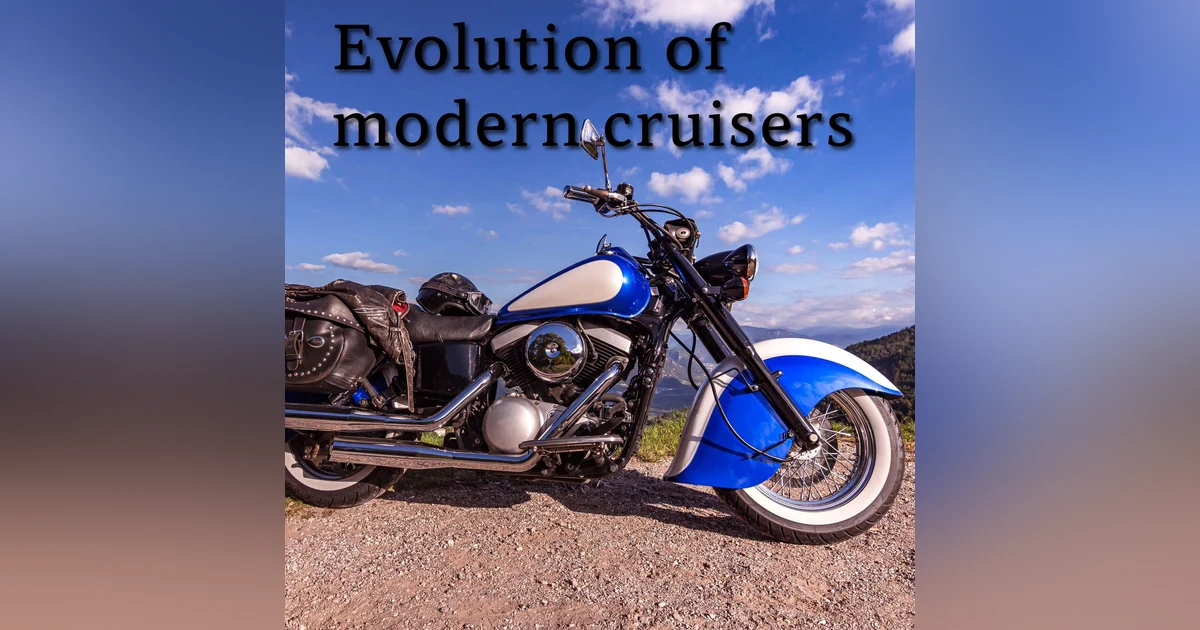

The evolution of modern cruisers has transformed the motorcycle landscape, shifting these bikes from their roots as relaxed, comfort-focused machines into high-performance vehicles capable of holding their own on the racetrack. Traditionally, cruisers were characterized by low-revving, torque-rich engines, a nostalgic design ethos, and a focus on rider comfort rather than outright speed or handling. With their soft suspension, heavy all-metal construction, and visually appealing but performance-limiting features, classic cruisers were built for stability and style, excelling at straight-line riding and highway cruising.
However, the last few decades have seen significant changes. The Yamaha V-Max, introduced in the 1980s, is often credited as the first muscle cruiser, boasting far more power than its contemporaries and igniting a new focus on performance. Harley-Davidson responded with the V-Rod, featuring a water-cooled engine and improved handling, while Triumph pushed the boundaries with the Rocket 3, first as a traditional-looking powerhouse and later as a lighter, more agile machine with sport-bike levels of horsepower and torque. Ducati's Diavel further redefined the cruiser genre by combining a superbike engine with a cruiser silhouette and advanced suspension and brakes, offering both comfort and thrilling performance.
American brands have also modernized, with Indian introducing the PowerPlus engine and Harley developing the liquid-cooled Milwaukee-Eight and Revolution Max engines. These advancements have not only increased horsepower and torque but also enabled cruisers to meet modern emissions standards and appeal to a broader range of riders. The evolution of modern cruisers has culminated in events like the King of the Baggers racing series, where these once laid-back motorcycles now compete on the track, demonstrating just how far they’ve come. Today’s cruisers blend tradition with innovation, offering the best of both worlds: nostalgic style and cutting-edge performance.
Thanks for listening!
Click the "Send us a Text Message" link above to send us your questions, comments, and feedback on the show! Please make sure you leave the podcast title. Or if you prefer to leave an audio message, leave us a voicemail on our website!
Subscribe to our newsletter to keep up to date on the latest from the show.
Check out our favorite products to use on and off your motorcycle.
Relaxed ergonomics and the open road, moving to racing? Where is the modern cruiser going? Welcome to the Throttle and Roast podcast. I'm your host, Niels In today's episode, we'll look at how the modern cruiser is changing moving from lower performance, but comfortable and tons of to bikes that can even race in the King of Baggers series. So let's get started with a look back at really the basic outlines of what a classic cruiser has typically been. And if we look at it, I'm going to start probably with the engine just because that's, that's oftentimes the heart of what we think for most In most cruiser applications, it's been understressed, low power engines. And what I mean by low power, before any keyboard jockeys get in here and low power meaning low They have traditionally not been trying to push the excesses of Now, where they have pushed was on torque. So most of the cruiser engines have a ton of and it's really oriented to be low max RPM. And so what happened is right off throttle, you'd have a ton of torque, but they also had this amazing character, this great vibration. And that was what was part of the draw and appeal to a lot of people. Here was rumbling beast. It untethered and unhinged in some in a very low frequency almost like an American muscle It really was just that V8 grumble that we had. And the other thing is that most of the cruisers tended to be air And a lot of cruiser owners tend to be how should we say, nostalgic, that might be the best way to describe it. And so we loved having engines that just as they had always been built. And of course, most engines started as being air what's one of the impacts of having an air cooled engine? well, because you have to have increased tolerances to allow for the various components in the engine to expand, It's not going to have the same absolute utter performance you're going to get out of something that has tighter tolerances. And so this is really where we're starting from the original ethos and where a lot of the cruisers began. It doesn't mean that there's something wrong with that, but it's just, that was the priority. There's always trade-offs in anything that you do. And so the priority was on character and torque and having that nostalgic feel of air cooled power. Now, if we think of the chassis, well, the chassis tended to be a bit more comfort focused. They were saying, Hey, how do we allow someone have really soft suspension so that any bumps in the road are sort of absorbed almost like the old school Cadillacs, you know, from the fifties where they'd hit a bump and they would just kind of roll over it. No big deal. And that can make it very, very comfortable. And the chassis also tended to be a little bit looser. They weren't a really stiff, tight chassis that was going to be high strung. Now, the consequence of that is when we have really soft suspension, we've got a kind of lazy or loose chassis in the bike's going to be very comfortable as it goes over any sort of bumps in the But if you're asking it to eke out performance and handle through a corner, that's not really what they're meant to do. They're going to be awesome in a straight Any expansion joints that you hit on the highway, it's going to absorb them quite effectively. It's really where a lot of the prioritization goes. Now, the last grouping that I think of for when we think of classic really comes down to almost like style and weight. Most of the cruisers that we saw from this era, they're all metal. Every piece that is on the machine is metal where possible. And that has an authenticity to it. It has an old school feeling to it. And that's a real appeal to a lot of enthusiasts. The downside of all of that metal is it adds a lot of Now this weight can make sure that the bike is going to be very stable going in a straight line. If you happen to be riding along and a big wind gust comes through, well, with a bike that's eight, nine hundred thousand pounds, "The wind's not gonna have as much of an impact onto you as a bike that might weigh 400lbs." so this really did help the motorcycles in their mission riding on a straight line on a and that's perfect for them. The other aspect, and this gets down to style, was more of a priority on visual design rather than performance. So some of the elements that we might focus on making sure are part of that imagery would be, for example, we want to see the fins of the engine to show that it is air-cooled versus having a water-cooled jacket around there where it might make the engine itself seem a little bit more plain. Or we may focus on having really ornate fenders like what you saw in early 50s, maybe 40s vintage of the Indians where the valanced fender was a big part of it. And so a lot of the design elements were really about what looks good, not necessarily what has the highest performance. And this is, I think in many ways, driven a lot of the almost purists when it comes down to what a cruiser is supposed to be. But, that doesn't mean that that is the only definition of it. In fact, we've had examples of companies that have been trying to stretch that definition a little bit outside of the traditional boundaries. Probably the very first one that I could find would be the Yamaha VMAX. Now, the Yamaha VMAX actually has a really, really long history. It first came out in 1985 and it ran until about 2020. Now, this was really the, if you will, original muscle cruiser. It had a V4 engine on the original model, which produced about 120 horsepower, which is way out of kilter to cruisers of its equivalent vintage. And it did feel a lot more like a muscle car, not just in terms of the character and the shaking, but in terms of it actually could go pretty quick. Now, it didn't have a whole lot of steering or handling, so it was really more oriented towards straight line performance. And that's why I'd say it was probably closer to a muscle car than a, let's say like a Coupe de Ville kind of casual cruiser kind of vehicle, which a lot of the cruiser motorcycles tended to but it wasn't a high strung sports car either. Now, the second gen bumped power up to 197 horsepower and 123 foot pounds of torque. It had better brakes and forks on the second gen, which really aimed to try to make it handle a little bit better. But if you think of this, there is really only across the, what, 35 years that that motorcycle is around, there was only two generations of it. So it's fundamentally two versions of the bike across that entire time period. Now, some people will say, oh, Japanese bikes, they're reliable and all that, but that's not a cruiser. That's not a cruiser at all. Well, Harley tried to get into this as well back in when they released the Harley V-Rod. Now, this was the Revolution engine, which was co-developed with and it was a water-cooled V-Twin. And as we talked about earlier with an air-cooled V-Twin, there's limitations to the amount of power and performance that you can eke out of an air-cooled twin. It's nostalgic. And if you're a purist of wanting to keep air-cooling is great. But if you want the performance, you're going to have to generally switch over to water-cooled. And this 2002 model arrived with about 120 horsepower and 84 foot-pounds of torque. it was pretty good. It actually had a decent amount of get up and go. And this did still, though, trade a little bit of the traditional torque that most classic cruisers are known for more top-end power. Now with the V-Rod, power actually did increase over its production run with about 115 horsepower on the very early models, up to about 125 in some of the later models. Not a huge range on there, so that's why I kind of say it's about 120 horsepower if you kind of round it out. It also had inverted forks and a steeper rake, which did give it a little bit more performance than a laid-back cruiser. So this was really Harley trying to break the envelope a little bit. the real truth of it is, is that Harley riders tend to be more towards the purist having that nostalgic feel. They want it to kind of look like it always did. They want it to have that feeling. The V-Rod was kind of just something else. It didn't really have the draw, at least traditional Harley that the other motorcycles in their range did. it did end production in 2017. So it was tried for a little while, but never really got the grasp that people were looking for. And this may be more of a Harley issue than a muscle cruiser issue, because there's other bikes that we're going to get into where this was a little different. And the first one I'll start with is the Triumph Rocket 3. Now, if you know the Triumph Rocket 3, you probably know that it actually had two major generations, one where the 3 was written as a Roman numeral with three I's, if you the next one where it was the numeral 3, which was the recent version. And I'll get into that one in a moment. But let me start with the original Rocket 3 with the Roman numerals indication. This ran from about 2004-2017. Now, the appearance on this bike was more like a traditional cruiser. It really had the aesthetic that those type of bikes would have. Lots of metal all over the place. It really had a feeling that looked like those. But what Triumph did, which was sort of insane, is they said, you know what? We've got these big V-twins that everyone is really excited about. Let's take that and supersize it. And what they did is they jammed a 2.3 liter inline into a chassis. And this produced 148 and 144 foot-pounds of torque. So this bike didn't give up the torque that a lot of traditional cruiser riders loved. But it just added a ton of power on the top end as well. It really broke the mold in a lot of ways. But being that sort of aesthetic of looking like a classic one, it was trying to kind of have a foot in both And while I think that people appreciated it purely for the bragging rights of having the world's largest production motorcycle engine, it didn't really take off quite as much as some might think. And that brings us to the Triumph Rocket 3 with the numeral 3 in its name. Now, this came back into 2019. So we had about a two-hour hiatus on the Rocket 3. And this looks more like a sport naked than a classic cruiser. But it is still really more cruiser-oriented than sport bike in the sense. it looks almost like perhaps a little bit of the hooligan style with the headlight setup that's on there with the twin headlights. And the twin headlights, of course, do harken back to some other Triumphs in the line that were really these sort of hooligan-looking bikes. So this was taking the way further away from the classic look and more towards a modern type of a cruiser aesthetic. And they decided, of course, as they were bringing in the new model, to bring it even larger. At the time, some of the other manufacturers were starting to get up to 1,800, 1,900, even 1,960 roughly cc's of capacity. So it was starting to get closer to that original one. And Triumph didn't want to get anyone anywhere close to its laurels. So they bumped capacity on the engine up to 2,500 cc's. Yes, this is a with an engine that is larger than a lot of cars that you buy today. 2 liters is generally about the average size of a lot of cars, certainly here in the United States. We're getting a lot of inline fours that are turbocharged. And 2 liters is the very, very common capacity level for them. This has more capacity than a typical car. Now, the three cylinders produced between 165 and 180 horsepower, depending upon the model year. The first few model years were about 165, and it produced between 163 and 166 foot-pounds of So you're not giving up the from a traditional You're just gaining all the power, too, and it's really remarkable that they managed to have it where the, at least the top-line numbers were almost clones of one another in that 165-ish range. For both in that first generation. The other change, and this is what switched from the more classic Rocket it was lighter weight. It's 642 pounds, which still sounds like a lot if you're used to maybe a traditional sports naked and the four to 450-pound but compared to a huge, typical big 642 pounds is a relative lightweight. It's a nimble, cruiser comparatively. The other thing that this bike had was huge brakes, radial calipers, and suspension that was tuned for performance. So this bike actually can handle. a 640-pound bike is not going to handle as well as a 450-pound but it handles really, really well for what it is. It's a really interesting dynamic And they do make this in two variations, so you have the roadster, which I'd say is closer to feeling like that sport naked. They also have the GT. All of the mechanics are exactly the same between the two bikes. The difference in terms of the and the foot placement. So on the GT, the handlebar is a little bit more swept and the foot controls are moved forward a Whereas on the R, they're a little bit more mid and the handlebars are a little bit more further forward. So you get into a little bit more of an attack position. And it's remarkable how that little ergonomic change can make the bike feel completely Now, of course, the style of the modern Rocket 3 is definitely not a classic cruiser, but it is still in that general vein of being a cruiser. And another one that sort of took this, you know what, let's redefine what a cruiser means was Ducati. And Ducati in 2011 released the Ducati Diavel or devil. this was basically an effort by Ducati to say, hey, you know, we've got these great engines in our super Let's put that into a low slung cruiser. And that was their basic design mantra Now, Ducati being Ducati, of course, they couldn't say, well, we're going to put it into a softly sprung chassis. And that's kind of squirrely and loose. No, they made it a really taut, tight with performance brakes, performance suspension. So the bike really could get up and But aesthetically, it looked more like a cruiser in terms of how you would sit on the bike and how the bike just looked from a dimensionality perspective. It was much longer than you would have on a typical sport bike chassis. And so if we look at almost that pairing of like the Rocket 3 and the Ducati these were really trying to break the mold of what a cruiser meant. almost saying the design aesthetic doesn't have to maintain this, but there's some of the elements. If you think of wheelbase being longer, if we think having a big and the Ducatis, of course, are big V-twins, just like a classic engine, although they're an L-twin as opposed to more of a 60 or 45 degree this was really the essence of what they were bringing to the table. But remember we talked about how Harley had brought out the V-Rod way back at the beginning of the new millennium. Well, Indian also kind of got into this, and Indian brought in their new Power Plus engine. And remember when they first came they had the Thunderstroke engine, which really evoked the styling of the old air-cooled engines that were in the late 50s, or sorry, the early And so what they did is they decided, hey, let's make a modern water-cooled We're going to put it into a much stiffer chassis. And they debuted this in 2020 with the Indian And some of the advertising in that era was really kind of meant to evoke a competition, Friendly or unfriendly, as you may see between Indian and Harley. That rivalry had reached back on, you know, to the beginning of the 1900s they actually did race originally. This is, this is the funny thing about it is Harley and Indian were brands in the early days. They slowed down into the mid-century and Harley kind of stayed and Indian went away, but their history originally had been much more in racing. And so Indian really was taking, getting into that heritage of saying heritage is not it looks like. We're having the same performance that we had way back heritage to them was really like the Indian wrecking crew. It was about racing and high performance and they followed up the challenger with the pursuit and almost like how Harley does, basically you slap a top case onto the bike and now it's a different model. You can argue it how you wish, but basically that's what it is. Yes, it's got a little bit of doohickeys in the front that are blocking some airflow from hitting your legs, but it's fundamentally, it's a challenger with a top case. Now the chieftain and the roadmaster were kind of more like, at least from a styling perspective, more like a street They had a fork mounted fairing and all of impact that that affects in terms of having a lot of weight that you have to move around. If you're trying to the challenger on the other hand was the Indian motorcycle that had a chassis mounted fairing. And so a lot of people would compare the challenger to the road and aesthetically, they have some similarities in terms of how the bikes look. So with the chieftain and roadmaster, when they now stuffed the power plus engine into those bikes, they took a bike that had street glide esque kind of fairing that was mounted onto the with an air-cooled engine and said, Hey, let's bump this up to get the modern and the modern to get a little more performance out of it. So this way you now have two different two basic models. The road crafter is basically a chieftain with a top case. So again, same but basically dividing the line into, do you prefer a fork mounted or do you prefer a chassis mounted fairing? And they give you your choice into both of them with still high performance. Now, Harley, of course, is sitting here and Indian starts doing pretty well. You know, they're, they're starting to take a little bit of market not all of it. There's some people who are like Harley or nothing, and we'll never look at another brand and that's fine. for people who were a little bit more open were considering of other and may have also had a strong thing of that. So they wouldn't consider any of the Japanese or the German even the Triumph, for example, or the Italians with the Ducati. This was a way that they could kind of do it. Now, Harley, of course, then had to get with the times with maintaining for emissions. And they came out with the Milwaukee eight engine. Now, this was liquid and it did have some of the benefits that you get from liquid cooling. So the power bumped up to about 105 and 130 foot pounds of which gave a little bit more get up and go than you had with some of the other lines. It still wasn't as, as powerful as the Indian Challenger, remember, which was 128 horsepower. So it was still about 20, almost 25 horsepower down, but it had slightly more torque. Harley tends to emphasize torque versus horsepower. And at the end of the day, if we're kind of honest about horsepower is simply torque multiplied by your RPM. it's just how high revving you allow the engine to be is how you can get the horsepower out of the bike. So really, they're not that dissimilar and they are predicated upon the same baseline. So that gave Harley their top end touring line, some of their mid-level, if you will, their soft tail an engine that could be a little bit more modern performance, a little bit more get up and It still aesthetically looked more like an air-cooled even if it was water-cooled. so the purists were a little bit more okay with it, which was fine. But they also have more of their entry line. And this is where the Harley Sportster was. Now, you know, whether you got the 1200cc Sportster or the 883, which is in itself an incredibly famous and iconic model line, the problem that Harley started running into is they couldn't eke emissions out of that bike. So they actually stopped selling the Sportster in Europe many, many years ago. even got to the point yeah, it just, it didn't have the performance and the irony of the name Sportster is it was the lighter weight, higher performance bike in the early days. But now it was kind of like as people will sort of knock it down a little bit and call it the baby bike or the low power bike. It's the beginner's Harley, if you will. It's a great bike, but people were knocking it down and it power that, especially on the 883, that wasn't really intimidating in any way. Nor was it something that maybe the name Sportster kind of really deserved to evoke. So in 2021, they came out with the Harley Sportster S. And the Sportster S was based on the Revolution Max engine. It's the same sort of engine that is used in their Pan America, their first adventure bike. But we've got this sort of liquid feature into here, which gave us a lot more power than we had in this. And now we also have an engine which can make emissions controls and requirements in Europe. Now this was, I would argue, more like the V-Rod than the traditional old Harleys and certainly than the old Sportster. And even just aesthetically, it had more of a sporty look to it than the old Sportster did. So if we think of the Triumph Rocket 3 with the Roman numerals versus the Rocket 3 with digital number, it was kind of that kind of an aesthetic jump between the two. And the Sportster S has the 1,252 cc engine in their higher end model with 121 horsepower. So it's got a decent amount of power. It was also lighter than the outgoing which was 564 pounds for the 1,200 cc version. And in the Sportster S, it's 502 pounds. So you're shaving off more than 60 pounds of by getting a bike that is a little bit more performance oriented. getting into that range. And this is, I think, where we're starting to see some of the changes. Now, there's purists who will say, and they hate the Sportster S, I can imagine all of you hearing this and, ah, the Sportster is not a Harley, whatever. But the truth is, is that this is where kind of move in a bit of the modern era with some of these, we have to kind of move with the times a little bit. We have to hit emissions. The demands for people where they say, hey, I want to, if I'm going to pay 20, 30, $40, 000 for a motorcycle that has 60 horsepower, you're going to get a little bit of pushback onto that. It's a lot harder argument for people to say they're willing to pay that much for a bike that doesn't really get up and go. And this leads us to the king of the baggers. Much like Harley and Indian used to race flat track and all sorts of other, yo know, racing on beach, everything under the there was a huge rivalry between Harley and Indian in the very early part of the 1900s. The king of the baggers was a way to kind of bring this back. Now, baggers, of course, is general term the touring style motorcycles and specifically cruisers that have bags mounted onto them. Now, a lot of, you know, motorcycles you can add bags onto, but these are really kind of permanent the weird thing is those are the kind of bikes that one thinks of as saying, yeah, that's a race bike. Generally, we're thinking of things that are more like a sports bike. So you might think of things a Panigale. You might think bikes like the Honda CB1100. You might start to think of a lot of the higher performance sports bikes that are out there, maybe even the BMW S1000. And certainly when you look at things like World Superbike, those are the kind of bikes that come to mind. They're very high performance, they even strip more weight off than the road-going bikes and you end up with these incredible power. Well, King of the Bagger said, well, why don't we do that but keep the aesthetic of a classic And since both Indian and Harley had gotten a little bit more performance out of their bikes, having these water-cooled there was a new opportunity for this rivalry between them. And the King of Baggers has run for a few years at this point. Unfortunately, this year, Harley has announced that they are pulling out of and I'm hoping that that might turn around in the future, but right now it seems they are not keen on focusing on racing right now. So we're left with only a few independent teams that would be running Harleys in the series, so it really becomes more of a single-brand series if it's just going to be which I think is unfortunate. But we have that being renewed of the rivalry between Indian and Harley, and it's kind of cool to see that these modern cruisers getting to be such high performance that, with a proper professional they can actually get some really amazing performance out of them. And they're leaning these bikes way, way over compared to what you would expect on a and getting around the track at insane, insane speeds. All right, let's wrap up. We covered how classic, air-cooled, comfort-focused cruisers had amazing but performance just was not a priority. And beginning with the Yamaha V-Max, the muscle cruiser was born, and bikes started to focus a little bit more on performance. It's not all the models and not all the brands, but there was definitely more of a move. Now, of course, it initially started as just straight-line performance, almost like a muscle and that's really what the V-Max's first versions were. But models like the V-Rod from Harley actually did try to improve this. They had a little bit better that let them get around the corners just a wee bit better. Of course, European brands upped the ante with the 2300cc Rocket 3 with the Roman numerals, and then later the 2500cc Rocket 3 with the digital number. And these produced, with the Rocket 3, the newest one, between 160 and 180 horsepower, and 165 foot-pounds of in a 640-pound chassis. This is just locomotive levels of performance. And Ducati went even further with the Diavel, stuffing a superbike engine into a low-slung and then using the suspension and brakes Ducati is so well-known for. And finally, liquid cooling came to more models in the Indian and Harley bringing higher horsepower and torque, and even resulting in the racing series King of Baggers. So my question for you this week is, what do you think of the push to more performance amongst cruisers? Share your thoughts through the text to show link in the show notes, or leave a voicemail at throttle and roast dot com slash voicemail. Thanks for listening. I'll talk to you next week.