Apple Podcasts

 Spotify

 iHeartRadio

 Podcast Addict

 Amazon Music

 Podchaser

 Castro

 Castbox

 PocketCasts

 Deezer

 PlayerFM

 Goodpods
 RSS Feed
Why Commuting by Motorcycle or Scooter Beats Driving a Car
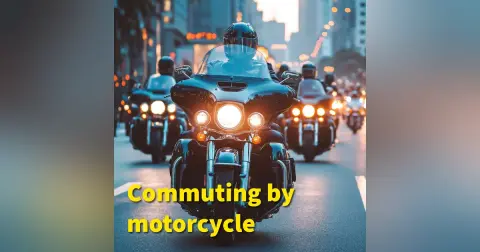
Commuting by motorcycle offers a refreshing alternative to the daily grind of car travel, and it’s a choice that’s gaining more traction for a variety of practical and personal reasons. Unlike the typical perception in the United States, where motorcycles are often seen as leisure vehicles, much of the world—and especially many Asian countries—embraces motorcycles and scooters as essential tools for daily commutes. Choosing to commute by motorcycle can lead to significant savings, increased efficiency, and even a more enjoyable start and end to your workday.
One of the most compelling reasons to consider commuting by motorcycle is cost. Motorcycles and scooters are, in general, much more affordable to purchase than cars, and the associated insurance costs are usually much lower. Fuel economy is another major advantage; motorcycles and scooters routinely achieve far better mileage than most cars, sometimes more than triple the miles per gallon. This not only saves money at the pump but makes your commute more environmentally friendly as well. Parking is often much simpler with a motorcycle, as the smaller footprint allows you to find spaces that cars cannot access. In many urban areas, motorcycle-specific parking can be both more convenient and less expensive.
Commuting by motorcycle can also save time. In areas where lane filtering is permitted, riders can bypass gridlocked traffic, arriving at their destination more quickly and with less frustration. The daily ride itself can be invigorating—many riders find that being on two wheels greatly enhances their mood and focus, turning a dreaded commute into a highlight of the day.
However, it’s important to recognize the challenges. Weather exposure, the risk of theft, and the need for proper safety gear are real considerations. For some, the daily ride may diminish the thrill of motorcycling, turning it into routine rather than recreation. Despite these drawbacks, for many, the benefits of commuting by motorcycle—cost savings, convenience, and the sheer joy of riding—make it a compelling choice for the daily journey to work.
Thanks for listening!
Click the "Send us a Text Message" link above to send us your questions, comments, and feedback on the show! Please make sure you leave the podcast title. Or if you prefer to leave an audio message, leave us a voicemail on our website!
Subscribe to our newsletter to keep up to date on the latest from the show.
Check out our favorite products to use on and off your motorcycle.
For many people, commuting is the worst part of the day. What if we could make it the best part of your day? Welcome to the Throttle and Roast Podcast. I'm your host, Niels Meersschaert. In today's episode, we'll look at commuting on a motorcycle, look at why it may make more sense than your car to commute, and we'll also look at using a vintage scooter for the ultimate in to modern scooters and modern commuter motorcycles that can be aligned perfectly to the mission. So let's get started with commuting on two wheels. where I am based in the U. S., we are a little bit of an outlier. Much of the world, especially in Asia, views commuting on two wheels as a norm. It's really just how a lot of people get to and from work as they need to, or even running errands. But here in the U. S., we tend to think of motorcycles more as leisure not as practical daily riders. So we aren't necessarily using our motorcycles for this daily commute. But I do want to point out that if you do decide to kind of endeavor into considering this as an avenue for you, there's a lot of advantages for them. And why could it even make more sense than buying, let's say, a second car for using as a commuter? And the first thing I want to start with is that bikes are, in general, are much cheaper to buy than a car. In fact, for me personally, I actually got rid of a second car and replaced it with a Vespa. Now, I paid to buy the scooter basically what my annual lease payments were for that other car. from a cost basis, my acquisition was basically one year of lease payments for the car, and now I have a full commuter. The second thing is that insurance tends to be significantly less for a motorcycle than it is for a car. Because oftentimes insurance is based on the purchase price. And because motorcycles tend to be lower cost than a car, your insurance also tends to be lower for a motorcycle. Now, of course, there are some exceptions to this. If you get like a high-powered sport bike, that's going to be a very different scenario. And quite honestly, I would say a high-powered sport bike, while they're a lot of fun, they aren't necessarily the best commuter bike. So I probably wouldn't recommend that as the bike to go and get to and from work all the time. Another advantage is fuel economy just tends to be better on motorcycles. And let me preface this by saying that I track every single tank on all of my vehicles, and I've done so for more than a decade. I happen to use an app called Fuelly, which makes it really convenient. I'll actually throw a link in the show notes for you. But what this allows me to do is at each tank, I'm getting a recording of what my current odometer is, how many gallons I put into the tank, what was the price per gallon. So I've got a ton of data, not just a miles per gallon, but also on fuel prices. And this is tracked just very easily at every single fill-up. And when you compare it to your last fill-up, I just look at the odometer that was on the last fill-up, the odometer on the new one, this is done automatically by the app. It can do the basic subtraction for you. It takes gallons fuel that you've added in, and it can calculate what your miles per gallon was, or liters per 100 kilometers, if that's the way that track your mileage. if you think of those really optimistic indicators that you might have in the dash of either your motorcycle or even a car, they are extraordinarily inaccurate. They'll usually say that you're getting three, four, five miles a gallon better than you actually are. So I like recording it by capturing the odometer and the amount of fuel that I've added to the tank at each fill up. Now, when I switched from that second car to a Vespa for basically using as a second car, the car I had been using was a Subaru WRX, which kind of a little bit of a sporty I mean, to be honest, it's not super, super quick. In fact, like I had a 50 year old motorcycle that was as quick zero to 60 as it. So it's not really breaking any sort speed limits or anything when you really think about But what I liked about it, it was one of the few cars that you could still get in a stick here in the United States. So I was like, okay, maybe that'll be kind of a fun little commuter if I need The thing is I was mostly using this to commute to and from my local train station for going into New York for maybe some local errands that I had to run. locally like this, I was often in the teens for miles per gallon. So like, you know, 12, 15, maybe 17 miles a gallon. So it was not really very fuel efficient my overall average was only about 21.2 miles per gallon for the 10,000 miles that I actually owned that car. So it really wasn't getting a really amazing amount of mileage. And the thing is I replaced it with a 2020 Vespa GTS 300. Now this is the big Vespa, which now I've got about the same number of miles on my Vespa as I did over that entire WRX history. But my overall fuel economy with the scooter has been 67.7 miles per gallon. So essentially I can ride more than three times as far on the same amount of with the Vespa as I could with that car. And even my worst fuel economy bike, which was a sport bike, a 2015 BMW S1000R, that bike had 160 horsepower. It was not a slowpoke by any scope of the imagination, but even that bike, I averaged 36.7 miles per gallon over the decade that I owned So any motorcycle will have far better fuel economy than any car that you have. And especially with the way fuel prices are today, this is an absolute benefit to you. Another advantage that you can think of with your motorcycle being used for commuting is parking. Bikes are so small, you can often find spots to park where other vehicles couldn't even dream of fitting. And some people will even park directly on the sidewalk where it's to make spots that are not normally available. So you have a lot more opportunity to be able to find some parking spaces. many, many years ago when I first started riding and I was commuting into and out of New York City every day, there was actually a motorcycle specific parking. And you got this thing called a muni meter pass and you would go and plug in the parking spot number that you had parked in. And it was $3 to park for the entire day. It was the most frugal way to park in New York City aside from just regular street parking. Now, another benefit of taking your motorcycle and commuting with is lane filtering. Now lane filtering is becoming legal in more places every year, especially here in the United States. And when you can ride between stopped lanes of traffic ceases to be an issue on your bike. So your commute might even be faster than it would have been if you took a car. And this is really, I think, something that a lot of people fail to recognize. And that's commuting on two wheels is so popular in many other parts of the world is because it effectively doesn't have the same traffic considerations that a larger vehicle is affected by. And then the last advantage that I'll say for commuting on your motorcycle every single is you're on your bike every single day. It's awesome. You're always on the bike. So the excitement and joy that you get from being on the bike all the you get to experience that every single day, both in the morning and in the evening. I think this is probably one of the best advantages if you're going to be commuting on a motorcycle. while I've touched on many of the big advantages of this, I do want to also recognize that there are some disadvantages that you can run into if you're commuting every day on your motorcycle. The first is weather protection. This is something we've talked about before. If it rains, you get wet. If it's hot, you're hot. If it's cold, you're cold. These are just the realities of riding on a motorcycle. We are far more exposed to the outside So you definitely want to make sure that you have the right gear to use with your bike as a commuter. And if you're riding, let's say in like Southern California where it rarely rains and rarely gets below this is an non issue. You can ride all the time, which is why so many more people ride But if you're in an area where we do have weather, you might need to do it a little differently. Now, when I first started and going into New York City every day, I was averaging about a thousand miles per month on my because I had to go into the city, back out of the city. I was doing all sorts of errands, et cetera, on there. When you think of that number of miles, A, just the amount of practice that you get is another big advantage. But, you had to deal with all the weather. And I'd had many times where I got stuck in the as I was going into the city. And so having a good set of Gore-Tex gear was key to staying dry no matter what the weather was. But even with that weather consideration, as I mentioned, that parking was $3 a day. I, at the time, I mean, gas was so bloody cheap. I was spending easily less than $3 a day in gas just getting to and from work. So $6 a day was cheaper than taking a train to go into the city. It was such a huge advantage and so simple. But the other thing is that it was also a little bit So if I was working a really late night, the thing is that as you get later into the evening, the trains ran less frequently. They ended up going to maybe once an hour after around like 8 or 9 o'clock. So a late night, you might get to the train station and have to wait an hour for the next train to depart. But on the motorcycle, you just get home. And guess what? There's no traffic at that time. So your commute was even faster getting home if you were running late. So huge advantage for even with weather issues. The other disadvantage, I'd say, for motorcycling is if lane filtering is not yet legal in your jurisdiction. This is one of the biggest advantages of a motorcycle when you're using it to commute, is that you take yourself out of the equation when it comes to traffic. and therefore your commutes are faster than they would be if you took a car. But if filtering isn't legal where you you'll be stuck in traffic just like any other car. technically it's a disadvantage, but at least if you were comparing it to driving a car, it's equal because you'd still have the same traffic. Where it becomes more of a disadvantage for a motorcycle, especially if you have an air-cooled engine, is the slow speed might allow your engine to overheat. So be mindful of that as you're riding because that is one of the downsides we could hit. The other thing is parking actually could be a downside. Now, if you can't park on the street or on the sidewalks, as I was talking about, you might have to resort to going into a parking lot or in a garage. And some parking lots and garages, especially garages typically in New York City, don't allow motorcycles because of concerns about liability if they get knocked over or whatnot. Some of them will actually have like little corners and stuff where they let you stuff the bike in where there's no way for them to park your car. And so, hey, they still get a little bit of revenue, but you're able to at least park. Now, the other issue is if you park on the street, you do have the possibility of being backed into and thus your bike being knocked over. So parking may not be perfectly ideal for you if you're on a motorcycle. Another disadvantage you might run into is theft is a genuine concern. There are some bad people in the world, and they may decide to take your bike from wherever you've parked it while you're at work. And it's a lot easier to pick up a bike and throw it into a van than it is to steal a car. this is a real concern. And if you happen to be commuting into an area crime is maybe a little bit more rampant, then this could be an issue for you. I'd say perhaps the biggest disadvantage to using your motorcycle for commuting every is that you might start to get where riding doesn't feel quite as special. If are really riding every single day, it's no longer a unique experience. It's something that you do every single day and it can start to feel a little rote. It can start to feel a just routine. And this might've been something that was a passion for you. And it might've been something where you got really excited about it. But now, because you do it every day, it might not feel as special. And I think it really depends on how you go in with the mindset of riding. I still enjoyed it. I didn't really think of it as a negative thing at all when I was commuting every day on the bikes, some people might get that feeling. But I still think to me, the biggest advantage even if you get maybe, Hey, the commute still is a little bit more rote and routine and you're not really excited about the commute. And I will fully riding to get to work and getting onto commute is not going to be as much fun riding as you might do in your leisure rides. But at the very least, you're getting more practice and experience as you get on the bike, you're having to deal with traffic. You will become a better rider just by virtue of doing this. So I do think there's, it's, while it might not feel quite as special, I do think in the and it's still an advantage. All right. Let's talk about a few different bike options that you might think about for commuting. As alluded to in the opening, I actually do have a Vespa that I use for commuting and for any sort of local errands that I need to ride. And while there are some who will say, Oh, a scooter is a tiny little motorcycle and may even not even call it a motorcycle. They get a lack of respect when it comes to waving on the road by other motorcyclists. And in general, a lot of people will frown on a scooter. But the thing is that a scooter is actually one of best vehicles that you can use for commuting because even compared to other motorcycles, it's going to have better fuel economy Additionally, you tend to have a lot of cargo space on a scooter. Most scooters have what's called a bag hook right in that center section. You usually have like right in front of your legs. So you can any sort of bag that you need to carry, whether it's a backpack, whether it's some grocery bags, whatever it is, you've got some way to carry other bags conveniently right in front of feet and legs. Not to mention, you also tend to have under seat storage. You might have a top case. There are just a huge ton carrying capacity options that come with scooters. And especially if we think of some of the vintage scooters, some of them have just a style that is unmistakably cool. And it's a reminder of a bygone era where the shapes were often simple stamp steel. And unlike many modern bikes that might have acres and acres of plastic, most vintage scooters were all metal. And so there's just, there's an aesthetic to them that can be really, really appealing. Now, if you were to buy a vintage scooter, this is where the acquisition cost can sort of vary a little bit. If you're willing to take on a project where you may need to do some work to get it up into running order, or maybe it has visual scars on it, so to speak, you can often get one of these old scooters for less than $3, 000. But if you were getting a fully restored model, these can cost up to $10, 000. And if you even got into a really rare example, maybe a scooter that wasn't made for very long, you might be up over $20, 000, even for an old used scooter. how much you spend to get one of these vintage scooters can matter a lot. The other thing I'd say with the vintage scooter is that while I think there's a cool factor that is outstanding, one of the things we talked about of an advantage for riding a motorcycle in general is fuel economy. And a lot of the vintage scooters tend to be smaller engines, often less than 100 cc's. And even though they are an old bike, because they this, you know, 90 cc, 50 cc little almost the thing is they could get 90, even 100 miles per gallon. So they really, really can be even more fuel efficient. But when you get into some of the larger models, like if I look at the more vintage era of Vespas that were similar to current GTS these were like 225. And they were usually available in like a two-stroke, sometimes four-strokes. But the thing is, they would often fuel economy as low as like 38 miles a gallon, and when you compare it to the roughly 68 miles a gallon I get out of more modern it's not quite as big of a benefit over a car. this is because they were oftentimes, you know, really old engines, no matter whether it was a scooter, motorcycle, or a car, they were just not as fuel efficient as a lot of modern engine designs are. And this could have been due to like jetting issues from the carburetors, but I think in more of the point it was really just about the lower overall efficiency that you had of these older engines. The other issue you could get on into with some vintage bikes or, and whether they're scooters or not, is kind of more of a broad spectrum, you get into maintenance. So when you think about any bike, you need to keep up with the maintenance, and especially with some of the vintage scooters. In many cases, some of the parts could be 30, 40, 50 years old, and they likely need a little bit of TLC. And as temps and altitudes change, carbs can be a little finicky, and some were even kickstart. So maybe they won't start immediately when you need to get to work and you're running late. cool. They may not be the ideal scooter or the ideal vehicle to use for your commute if you're in a hurry. I think they're absolutely awesome looking from an aesthetic but maybe they're not the perfect thing. And this is where some of the modern scooters might kind bridge the gap a little bit. the style that we had of some of the vintage scooters absolutely amazing. And that's probably brings a lot of people the appeal for some of those vintage scooters. Some of them also like some of the mechanics of them, the fact that they were not CVTs, that you actually had a transmission. But a lot of the modern scooters will all be CVTs, so they're a little bit easier, especially if you're a beginner. This is a little bit easier to deal with. But the thing is, they can also look the part. So if you look at some brands like LML, this was originally licensed by Vespa to build in India. And you can today get a bike that pretty much looks identical to a Vespa PX because they just never stopped making them. And these were originally marketed as the genuine Stella until maybe around 2017 here in the U. S. And they often felt like a bike that was stuck back in time with manual transmissions and even two-stroke engines. it was a vintage scooter. It just was still being made. So this was kind of cool. Now, Lambretta is another brand that, yes, they're still made today, although the company did originally shut down back in 1972. the brand's machinery and fabrication materials were bought by scooters, India Limited. And they've kept building the scooters since then. But eventually, as sales declined, they stopped production back in 2022. So only recently. However, Consortium has taken on the brand name and now produces some new models with some old looks of the old Lambretta's. And they're generally produced in or the global markets. So it is another one that you could take a look at if you really want that sort of classic old vintage looking scooter. But one that maybe has a manufacturer date within the past century. Now, of course, we have to get back to Vespa, which is what I personally own. Now, Vespa is part of Piaggio. And Vespa still makes models that evoke much of the old styling of the vintage scooters. And as I said, I have one of these. This is a GTS 300. It's a 2020 model. And this has the high power, thus HP version of the 300cc engine. This was released back in 2020. So mine was the first model year of that HP engine. absolutely mind staggering 22 horsepower. Yeah, no, it's it's not the quickest bike out But it will generally beat most cars in zero to 30. But then it just takes its sweet time getting up to a red line of about 80 miles an hour. So really good off the line, really good in an urban environment. But if you're going on the highway rides, it's going to take a little bit of time to get up there. And because of the small wheels at it's a little squirrely. You can do it, but it's a little squirrely. Now while scooters make some great commuting options, especially if you're in an urban or if you're only running on local streets, which is typically my use case that I have here. the small wheels in the engine do make that highway use case a little bit more of a challenge, I'll say. Now there's plenty of storage and that's one of the biggest advantages for why a lot of riders love using scooters for daily commutes or for any sort of errands. I've gone grocery shopping on mine, I've even carried two by fours of wood on mine, but we also have a lot of great options for commuting bikes if you need to get on the highway for an extended period of time, or if you want a bike that can also be a little bit of fun in the twisties on the weekends. So I'm going to, I'm going to kick off with a few bikes that are, I'll still generally call them ADVs and ADV is probably the most popular category of motorcycle today. I think of it as a Swiss Army knife. So it's really, it's a really good bike in general, but there's ranges of what a ADV can be like. So you might have something that's a little bit more on the going out and full adventure. You're off-roading a lot. And then there's ones that are a little bit more street oriented. I'm going to focus on the ones that are a little bit more street oriented today. I'm going to also look at the ones that really, I think are awesome for commuting purposes, specifically where your priorities might be keeping a low cost to buy it. It might be a little bit more of a fuel economy than absolute So one of the first ones, and this is probably the upper end of, Hey, I want as much performance as I could possibly get, but still keep it in that moderate zone is the BMW F 900 XR. Now this was inspired by the original S 1000 XR that took the super bike engine and put it into a tall rounder. The F 900 XR takes the engine from the ADV series and puts it into a sportier, tall rounder. And as foot pounds of from the 895 CC engine is respectable, but the tuning is more towards the sporty end. So the fuel economy will be more like a sport bike in the mid to high thirties. Now, if we're going to talk about commuting motorcycles, it's really hard to talk about these without discussing the Honda NC 750 X. Now Honda's option isn't quite as sporty as the but it can also be had with the DCT, making it even more approachable to new riders. Or if you're going to be stuck in traffic for long periods of time, not having to manage the clutch can actually be a real godsend. This is why a lot of people use scooters too, it doesn't have that as a concern. Now the faux fuel tank on this actually is an interesting endeavor because it actually offers a ton of storage right in the bike. So if you needed to carry some random objects with you to work, you can just stuff them into that built-in storage. So it's a really good bike for commuters because of that. And you still, of course, have a real fuel tank. It's just under your seat. And the focus on economy is evident though. You should expect 50 to 70 miles per gallon, depending upon how aggressive you are on the throttle on the Honda NC 750 putting it right in competition with some of the smaller scooters. As I said, my Vespa GTS 300 over the years I've owned it, 68 miles a gallon has been what I have averaged over all that time. And you can get in that 50 to 70 mile a gallon range with the Honda NC 750 X. So it an absolutely awesome commuter, but it will be a little bit more fun if you want to get onto the back roads and just have it as a fun all around bike. And certainly if you're going to be doing highway riding because it's got normal size motorcycle I think it's a better bike if that's the kind of commuting you need to do. Now another bike that you could use for commuting is known as the Stormtrooper or the Suzuki V-Strom. And specifically the 650 variant is the one that I'm going to talk about for commuting purposes. Now this has been a staple amongst commuters for many, many years. And while it looks like an ADV, it's really happiest on the street. And like the Honda, you can expect 50 to 70 miles per gallon, making this bike very frugal on fuel usage. And current fuel prices, that alone might be worth switching your commute from a car to a bike. When you can switch from whatever you're getting, 18, 20, maybe 25 miles a gallon out of your car. And you could double that with getting like the Honda or the Suzuki. And now for something completely different. What if you are riding less than 100 miles each way on your daily commute? You might even consider something that never needs to go to a gas station. Now, Zero's SR-F claims up to 176 miles of range. You just plug it in when you get to work and when you get back home, and your tank is full again for tomorrow's commute. And a rapid charger that can be installed into the motorcycle can give you a full charge in less than two hours from basically empty. Now, range does drop on higher speed highway runs to about 115 miles, but if your commute is less than 50 miles each way, even if you can't charge at work, but just at home, this could work for you. And along the way, you're going to have a lot more power than some of the other commuters that we looked at. This bike has 140 foot-pounds of torque, which dwarfs any of them. You remember the BMW, which was the sportiest of that, only had 68 foot-pounds of torque. And the Zero also has 113 horsepower. It's going to be a quick bike. Now, for me, I look at saying an electric bike, I think they're a cool concept, but if I was using it as, hey, I'm going to go and have fun out into the twisties and into the mountains, I don't know how long I'm going to be out there, finding a place where I'm going to charge a bike, that's a little bit more questionable. But as a commuter, I actually think the equation changes, and an electric bike could actually make a ton of sense. And since you come home, you plug it in, and it charges overnight, it's ready to go the next morning, you never have to worry about going to a filling station with an electric motorcycle. And so for commuting, I think this is a very different option. So let's wrap up. We looked at several reasons why you might want to commute on a motorcycle. It's cheaper than a both to buy and to run, and you might even squeeze through traffic a little bit easier. And we covered some pros and cons of using a vintage scooter, or even a modern scooter that can still look vintage. a few full motorcycles that fit the commuting mission perfectly. So my question for you this week is, do you commute on your motorcycle? Why or why not? Share your thoughts through the text to show link in the show notes, or leave a voicemail at throttle and roast dot com slash voicemail. Thanks for listening. I'll talk to you next week.