

 Apple Podcasts
 Spotify
 iHeartRadio
 Podcast Addict
 Amazon Music
 Podchaser
 Castro
 Castbox
 PocketCasts
 Deezer
 PlayerFM
 Goodpods
  RSS Feed
 Overlooked Motorcycle Gear Essentials for Every Ride: Safety, Tools & Tips
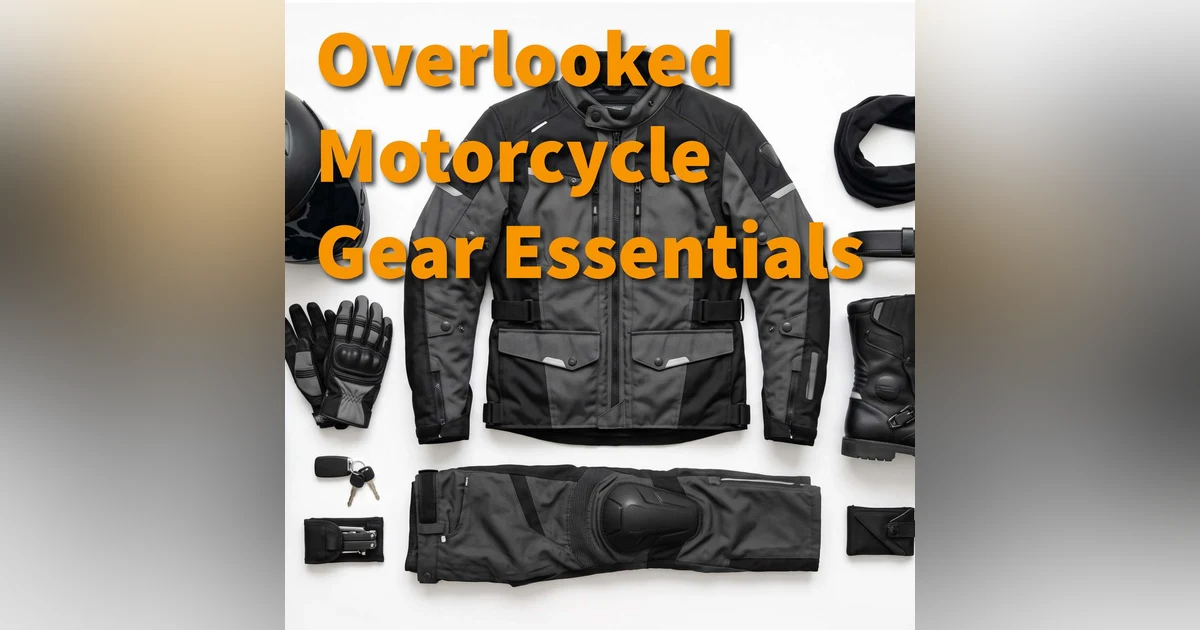
Understanding motorcycle gear essentials is about more than just safety—it's about enhancing comfort, convenience, and the overall experience of every ride. In this episode, we spotlight the gear that makes riding more enjoyable and practical, whether you’re heading out for a daily commute or planning an epic weekend adventure. We explore helmets that offer not only protection but also superior visibility, ventilation, and built-in tech features like Bluetooth communication or integrated sun ...
Understanding motorcycle gear essentials is about more than just safety—it's about enhancing comfort, convenience, and the overall experience of every ride. In this episode, we spotlight the gear that makes riding more enjoyable and practical, whether you’re heading out for a daily commute or planning an epic weekend adventure.
We explore helmets that offer not only protection but also superior visibility, ventilation, and built-in tech features like Bluetooth communication or integrated sun visors. The discussion moves to jackets, pants, and suits designed for comfort, weather adaptability, and ample storage, with a look at how different materials and features can transform your time on the road.
Gloves and boots, too, are covered from a perspective of grip, tactile feedback, style, and weather resistance. We share our favorite picks for gear that keeps you warm in winter, cool in summer, and dry during sudden downpours—without sacrificing freedom of movement or personal style.
The episode also highlights must-have accessories that elevate the riding experience, such as quick-access tank bags, smartphone mounts, hydration packs, and modular luggage systems. We provide insights on how these motorcycle gear essentials make traveling easier and help you stay organized, connected, and ready for whatever the journey brings.
You’ll also learn practical tips for choosing gear that matches your riding style and personal preferences, along with advice on maintaining and upgrading your collection as your needs evolve. Listeners will walk away with a toolkit of ideas for making every ride smoother, more comfortable, and tailored to their unique adventures—proving that motorcycle gear essentials go far beyond basic protection and are a key part of enjoying the ride to the fullest.
Thanks for listening!
Click the "Send us a Text Message" link above to send us your questions, comments, and feedback on the show! Please make sure you leave the podcast title. Or if you prefer to leave an audio message, leave us a voicemail on our website!
Subscribe to our newsletter to keep up to date on the latest from the show.
Check out our favorite products to use on and off your motorcycle.
00:00 - Introduction
00:32 - Safety gear
06:18 - Emergency Gear
18:44 - Utility Gear
27:55 - Wrap up
The first essentials, of course, is to know what you want. Welcome to the Throttle and Roast podcast. I'm your host, Niels Meersschaert. In today's episode, I'll look at some of those overlooked essentials that you want with you on every ride, whether it's safety gear, something for emergencies, or even some quality of life accessories that can make your riding better. We've got you covered in this episode. So, I'm actually going to start with safety gear, because I think when I sort of reflect a little bit on what are some of the things that you actually need for your motorcycle on every I think you could probably argue a little bit about, well, these are items that I don't need on every trip. Maybe if I'm going for a longer one, I might need some of these. But I think for safety gear, in a way, it's really something that you need on every single trip. If you look at most stats, 90% of all accidents usually occur within 5 to 10 miles of your home. So, even if you're going for a really short ride, that's where it's going to happen. I know there's a lot of people who will say, oh, it's too hot to wear riding gear or whatnot, but I think it's really essential. And if you think of riding gear, not just as in the event of an accident, but also keeping you more comfortable, I think this is where it really sort of makes a lot of sense. So, if you think of these, I think let's talk about a helmet, because a helmet is obviously one of the most critical pieces. It is a requirement in many jurisdictions that you have to have a helmet while you're riding. But I think there's a couple of add-ons to your helmet that can actually make your riding also a little bit more comfortable when we start to think about, well, what, how do I make this really an essential? And one of those that I think really, if you can get it on your helmet, and not every helmet can support this, but try to get a helmet that has a pin lock available for it. Now, a pin lock is, you can think of it almost like double pane window that you put onto your visor. And what this does is it has a seal around the outside edge of it, and it traps a little bit of a layer of air in there. And this keeps that portion of your visor from fogging up. So, if you're riding in a little bit cooler temps where there's a bit of moisture in the air, it's very common that you're going to get some fogging onto the inside of your face shield. And this, of course, can make it near impossible to see. But if you have a pin lock, this is going to keep that area pretty clear. So, having a pin lock on a helmet, I think, is a really critical essential that will allow you to ride in more conditions than you would otherwise. And that's really a critical piece. Now, closely related to this, I think as you're going out on these rides, it's worth bringing with you something to clean your visor. Now, this might include a little kit. There's some Muckoff makes, actually one that I use on most of my bikes. And it essentially will have like a little microfiber cloth, a little bit of a spray to actually act as a cleaner for it. And you can at least spray off your visor when you're stopped and get off any bugs, any dirt, anything that's sort of gotten in there that's obstructing your vision in some way. So, it's a good way to kind of keep your helmet ready to go as easily as possible. And it doesn't take up a lot of space, whether you stick it into a jacket pocket or you have any sort of a pannier or a bag or a tank bag of any sort on your bike. This is a really easy way to do And of course, you also need to have with your riding gear, you're going to need some riding boots. You're going to need your gloves. These are all, again, that protective layers that are just going to keep you as comfortable and as protected as possible in the event that you have any sort of a crash. I've just seen far too many accidents where people were riding in, like, tennis shoes, or they didn't bother with gloves, and now there's a lot of skin grafts that are necessary for that individual because of that decision, and if they had just put on a pair of gloves or a pair of boots, they would have been completely fine. So, I know it sounds like I'm getting up on a soapbox here, and I probably am, but it is one of these things where it is an absolute essential for you to use when you get out onto a bike. Now, there are going to be some of you who may say, nah, I totally disagree with you, and I'm going to go and ride without it, and that's your choice, obviously, but I would really encourage you to take advantage of this and really make it just part of your everyday, and once you kind of do get into the groove, it starts to become a non-issue. It's just, it's a normal part of it, as you get out on the bike, you're just throwing on your riding gear, and if you want something where you say, oh, but I don't want to change into something, maybe look at something like an AeroStich Roadcafter. You can literally put this on over your regular street clothes in about 30 seconds, so complaining about, oh, it takes too long to put on riding gear really becomes a non-issue. Now, the other thing that I'd say is a good element to bring with you on most any ride, certainly if you're going out and maybe it's like, it's overcast, and you're thinking maybe you might get into some areas where it might rain, is bringing some waterproof gear, and this is where things like that Roadcrafter that I just mentioned can be actually really advantageous, because they are already a waterproof suit, so you don't have to have a second thing that you put over another set of riding gear to suddenly make you more waterproof. If you have something that already is Gore-Tex, already is waterproof, your life is just a lot simpler. Now, the only downside is that as it gets into really hot conditions, the Gore-Tex is going to be not quite as breathing as other fabrics will be, so that's the trade-off, but I think for most of the year, it's going to be pretty good. The other essential that I would say is earplugs. Riding on a motorcycle can be very noisy, and not for what you think of just the engine, and the engine in the exhaust and all that, and they can make a wonderful character, they're a part of the experience, but it's actually the wind noise that's the bigger problem. And so earplugs will help you eliminate any of that wind noise sound, or at least minimize it, and allow you to actually hear other things that you need to hear. You can hear honks of horns, you can hear emergency vehicles, all the things that you still need to hear. You can even have ones that still allow you to hear meaning that they're going to be attenuating the frequencies that are outside of that, so things that are very high-pitched, like your wind noise, or very low-pitched. You're going to get rid of those with earplugs, and this is going to be really a very clear essential. Now, this next group that I'm going into something that maybe you may decide, I'm not going to use this on every single ride, because I don't want to carry all that stuff, I don't want to have the stuff into my panniers, or I don't want to have to have panniers on my motorcycle when I'm just going out for a quick ride. And that's fine. But these are some things that, certainly if you're going on for like a full day ride, or an overnight ride, I would say, yes, you definitely want to have these with you. So the first one is a toolkit. Now, even if you are not the most mechanically inclined individual, having a toolkit will allow you to at tighten up some loose fasteners, or address some minor issues that you might have on the bike, so at least you can get back out on the road and going again. And I would say if you don't want to carry a full toolkit, and there's a lot of them that are made, you know, Cruz Tools makes a lot for various different brands, I'll put a link in the show notes for some of their stuff. even if you don't have a full toolkit set up, I would say at least bring something like a multi-tool. Think of something like one of the Leatherman or a Swiss Army knife, something that has at least a couple of tools on it that might be able to at least have you do something on the bike. So on my bikes, for example, on my adventure bike, I always have a tank bag on that bike. I may not have other bags, but I always have a tank bag. And I always have a Leatherman sitting in the tank bag. So if I need anything to do any minor repairs, it's always there on the bike. When I go on a longer trip, I'm going to pack a full toolkit. But at least for my everyday riding, I always have a Leatherman on the bike. Now another piece of gear that you might hear and say, oh, but I don't really, really need that. I would say, if you're going on a longer trip, I would absolutely suggest that you bring it, and this is a jumpstart battery. If you've ever gone for a long trip, and maybe there's a, a fault, or maybe you have a piece of electric gear that's on your bike, and you forgot to turn it off, and it's now slowly draining your battery, and then you go to start your bike the next day, and nothing. This is where a jumpstart battery really can help, because you can then get the bike started with this jumpstart battery to at least get you on your way, and then you can figure out like, oh, whoops, I left the GPS on, and it was just draining the battery the whole night, so that's where the problem But having a jumpstart battery can help, and not just for yourself, but let's say you're riding with a buddy, and they have this issue, well, if you have a jumpstart battery with you, you can at least help them get them back up on the road and moving again. Now, another tool that I think is helpful to have on any doing, especially if you're going to be riding, let's say overnight, or you're going to be riding all day, have a flashlight and maybe some sort of flares. There's also some flashlights that will have like a flare wand that you can put onto them. I use these on my bike, but having a flashlight will allow you to be able to look on the ground, look in the bike, see the little nooks and crannies, and be able to find what you're looking for. See if there's something that's broken. So they're really good, and especially if it starts to be a problem as the lights go down, having this extra light that you can then warn traffic away, or ask for help, or be able to see what you're doing to repair your bike on the side of the road is really, really critical. So a flashlight, it's a very simple little peace of mind that you can put in there. I like ones that you can actually charge through USB. This makes it really easy to actually, you can oftentimes charge it directly on your bike, or when you get to wherever you're staying, you could then charge the flashlight up again, and you always have something that's ready to go on the bike. Now another thing that I'll say, especially if you're going on a longer trip, this is really a, almost a must have in some ways, and it depends on the type of bike you have. So let me, let me start with the more common case. Most motorcycles today are going to be tubeless tires. so unless you have spoked wheels, you're probably going to have tubeless tires. And the advantage of a tubeless tire is that it does not have a tube, which means if you need to patch a puncture, that is far simpler than if you had a tube, because you can actually just put in a plug. So bringing a tire plug kit with you makes your life a thousand times simpler, because you can get back on the road by plugging any sort of puncture. So if you get something that comes in through the bottom of the tread, it punctures through, you lose all of your air. Well, you can put in a plug kit and do this. Most of these are what's called a mushroom style, and you'll use a device which will let you put the plug directly into there. You may need to ream the hole out a little bit more to let the tool fit in, but you can put the plug in, and then you can actually slice off the end that's sticking a little bit further in. And this will plug the tire enough for you to get to a service center to get the tire replaced. Related to this, and this is something that you probably want to have, if you're not going to bring a tire plug kit, you probably want to have one of these anyway, is you ever run it and you're riding along and then you wait, you say, something's wrong with the bike. It's feeling a little wallowy. It's kind of moving all around. And you stupidly had forgotten to check your tire pressure before you left for the day. Well, if you have a tire inflator, you can address that as you need right on the road. Very easy then to be able to pull over, plug in your inflator, and just get your tire back up to the specs that you need. Now, there are a few different types of tire inflators. I have one that I've had for probably more than 10 years by a company called Best Rest, and it's basically something that can plug directly into the bike. You can plug it into, let's say, if you have one of the DIN connectors, very commonly known as a BMW plug. you can run power for this directly off of the bike. It makes it very convenient and very easy to use. But one of the cool things that has happened in recent years, especially as batteries have gotten much more capable, is you can actually get one of these battery-powered these tire inflators. Thank you. And so a battery powered tire inflator, you can just bring with you. And then it's the one device you hook it up. It usually has a bit of a pressure indicator built into it already. Makes it super easy to be able to inflate your tire as you need to go. And yes, you could pull into a gas station and maybe they have a tire inflator that's there and maybe it's in working order, or you could just bring one of these with you and you never have to worry about it. And especially if you get a low tire pressure situation, or if you had to use that tire plug kit before, well, now you have something that can get your pressure back up again. And some people will say, Hey, just use one of those cartridges that you can put into the, some of the tire plug kits. They're okay, but I personally prefer having a dedicated inflator because Murphy's law is going to tell you that if you have the CO2 cartridges and you get a full flat because you had a puncture, you patch it. And now you try to put in the CO2 cartridge and actually your patch wasn't holding. So now you got to repatch it again. And now you've run out of your CO2 cartridge. You don't have enough CO2 cartridges to fully inflate your tire. Well, if you have a dedicated tire inflator, it really doesn't matter how much you need to repatch it a few times. You're going to have enough capacity to be able to do it when you need to. So I really like having a tire inflator. Now, another kit that I will always bring with me as I'm going on to longer trips, and especially if I'm riding with a group of other people is I'll bring a med kit. You hope you never need to use it. But in the event that you do, having a med kit can actually make the difference between life and death for someone who you're dealing with and supporting. You could at the very least stop any sort of, if you have some traumatic injury and there's blood flowing, you can at least stop the blood flowing. You can patch them up at least a little And even if you think of it for secondary uses, let's say that stopped along the way and you're just hiking and now you fall down and you scrape a knee or whatever. It's like, well, you can throw a Band-Aid onto it. You've got at least a little bit of stuff that you can suffice yourself while you're out on the go. And it doesn't take up a lot of pack space. Now, if you go wanting to have a full trauma kit, obviously that's going to use more space, but designing your own med kit for what you actually feel comfortable doing on the side of the road and what you actually need, this is really helpful. There's a lot of them that are actually pre-made that you can get as well. I would look at some of the hiking ones are actually pretty good kits. They're fairly lightweight as well. Easy to throw into a backpack or into a saddle bag. And closely related to a med kit, I would say the second issue that I would bring with you is a GPS tracker. Now, there's a couple of different makes that do this. Spot, in-reach. You know, these are a couple of ones that I've personally owned over the years. And what's nice about these is that they will track your location as you're going. And you can even then share that location to a loved one or a whole group that you wanted to share it with. But in the event that you get into an emergency, you can actually request emergency support. And it will go through satellite to be able to tell them that they need help at your location. So even if you're in an area where you do not have cell phone coverage, you can still ask for help. And these are really, really critical. Especially if you're riding, let's say, more an adventure type of a ride and you're going into more of the backcountry, especially like backcountry discovery routes. You are oftentimes not in areas that have cell coverage. So your only way of communication might be one of these. I had this happen a number of years ago where we were riding a big group and one of the people we were riding with just got a little distracted, rode off the road straight into the one tree in the middle of the field and crashed his bike, was basically fading in and out of consciousness as we were on the side of the road. So I had my med kit. We were doing everything that we could to stabilize them. But I also had my spot tracker. And so I requested the spot tracker because no one had cell coverage there. And we were able to then get emergency support to bring him into the hospital. So really critical to have these in the event that you're riding with a group and need some help. And even if you're riding solo, the big thing is this can also help you if you need help. And you can't obviously fix yourself on the side of the road. And you realize I just need something or your bike is totally destroyed. You have no way of getting anywhere. These can really, really help you. Now, while a lot of that stuff seems sort of really emergency oriented and very, perhaps pessimistic of, well, you assume that you're going to have a crash or you can have a problem on the side of the road, we hope we never need to. And, and that's probably the case of anything is we hope we're never going to have these issues. But I think some of the toolkit stuff, these are common enough that you really need them. Maybe you might argue the MedKit or the GPS tracker is really sort of a Debbie Downer sort of a thing. But when you need them, you'll be glad that you have them. And this is really kind of what a bit of the adage is of what are these overlooked items that you might want to Now, there's one that I think a lot of people make a mistake in not bringing with them on every ride. And I would actually say this is something that is, you could think of it as an emergency item, but I actually think of it more as a practical item. And this is bringing a water bladder or a bottle with you on every single ride. Because let's say you're riding along, maybe it's the top heat of summer, you're riding along, and now you're starting to get really thirsty, but you're in the middle of nowhere, because you're on the really fun roads. Well, what do you do, you're going to now start getting thirsty, your attention is going to start to fall, it's gonna be harder for you to ride. So from a safety perspective, having or an availability where you can take a sip of water is really going to help you as you're going through the ride. Now I personally really like the bladder style, because I'm going to throw it onto a backpack. and I can be sipping my water the whole time that I'm riding. So I never really get to that point where I'm thirsty because always hydrating as I'm riding along. But that may not work for everybody. And so at least if you have like, let's say a water bottle in a pannier, you can pull over, you can stop, and you can drink some water. This also helps you in the case that you did have an emergency situation, if someone has, you know, crashed, gotten injured in some Giving them some water is a way that you can just keep them feeling hydrated as they're probably having elevated levels of stress due to the it is something that can really help if you get into any sort of emergency situation. So let's switch gears from maybe some of the emergency kind of elements that you might want to bring with you into maybe something that I'll classify as more of like utility or cargo type of essentials. And so the first one that I'll say here is a Bluetooth headset. I do consider these really more of an essential today than they might have been 15 or 20 years ago. And the reason is, is that a Bluetooth headset, in addition to allowing you to listen to music as you're riding, which is something I really enjoy being able to do, or to hear your GPS instructions when you're on the bike, which is really helpful. It can also allow you to, especially if you're on a group ride, communicate with your other riders. So you can give warnings to the riders behind you of there's some road hazard up ahead, or you can even say, hey, I need to stop for gas or I'm getting thirsty or I need to use the restroom, whatever it is. Bluetooth headset really does help in that situation. And even if you're riding solo, as I mentioned, you can use it for the GPS purposes, but also you can have, if you need to make a phone call or someone needs to call you, you can actually take that just as you're riding along. No big deal. So a Bluetooth headset really does help immensely. Now, another one that I'll put in as a sort of an electronic add-on is a key finder. One of the things that can suck if you have a motorcycle that has a physical is now what happens if you can't find the physical key? I've actually had this happen to me on one of my bikes, and what had happened is that I had it in my pants pocket, and there happened to be that the, you know, a lot of motorcycle pants pockets have almost like a mesh sort of pocket. It's fairly lightweight. Well, it had kind of broken through a little bit, and a little hole had opened in the bottom of the pocket, and my keys to the bike had actually fallen into liner of the riding pants. And I'm looking around, I cannot find my keys for the life of me. I don't know where they are. They were in my pocket, but I can't find them now. And was unbeknownst to me that they had fallen into the liner way down in my pants, so I just, I was looking all over for them. And if I'd had an AirTag, for example, mounted onto the keychain, it would have been super easy for me to locate where my keys were, and I would have been like, oh, they're still on my person. Great, and then I would have known that they were there rather than thinking I'd lost them somewhere the gas stop that we were on. So having something, whether it's AirTag or another brand doesn't much matter, but something that you can use to locate your keys. Now, even if you have a key fob for one of those keyless type of ignition, this is still helpful because at least then you know where it is. So if you did leave kit, on the table at the diner when you'd stop for lunch and now you get back to the bike and you're like, the bike won't start, well, at least you can figure out where the key fob is. The next thing that I'll say that's really a good essential to bring with you, especially if you're going onto a trip and even if you were doing your daily commute, you might want to consider would be a bike lock. It's you hope that no one's going to take away your pride and joy when you're stopped somewhere. But the reality is that it can happen and you aren't going to prevent theft, but if you slow it down or make it less convenient, thieves will move on to the next option that's out there. And the best way, of course, is if one lock is good, multiple locks is often better. So you might have a combination. You might have a disc lock, which will keep the bike from just being rolled away. You might also have a cable lock that is locking it physically to some element. Now, there's so much variety of the kinds of locks that are out there from various cable locks to the, you know, almost forget about it, New York City chain. That's this really, really thick, heavy links. And there's a balancing act of how much you bring versus the weight that it adds on. you're always having to think of what are the trade-offs of one particular option versus another as you're going on a trip. But I do think having at the very least a disc lock, and it seems super simple, but it's so small, so lightweight, you can throw it into a tank bag real easy. it does help mitigate at least a little bit or delay if someone really wants to get your bike. All right. The next thing that I'll mention is some things that I think are just really helpful to have with you. First off, in case you didn't bring anything with you on this particular day trip or minimal that you've brought with you, but really think about maybe some like bungee cords or personally what I prefer is RocStraps. RocStraps are kind of like they have a bungee section to them that they're really fundamentally nylon webbing that you can attach to, tie down points on your motorcycle. Like if you have a luggage rack, for example. And so if you did need to add something on to your set up that you didn't have space for before, this allows you to kind of strap it down. So if, for example, you had a riding jacket that was a rain that you needed to take off and you weren't going to use it now because it's dried up and it's no longer raining. Well, you could put that underneath the RocStraps or underneath the bungee cords and tie it down into the back onto your luggage rack. It makes it really easy. Or maybe you had some problem. Maybe one of your panniers fell off and lost its connection and you cannot physically tie it down onto your bike where it was originally meant to Well, if you have RocStrap, you could tie it onto your luggage rack and at least keep the bag with you as you're riding along and have some other option for this. Or let's say you go in, you find this really cool shop and you find something you want to buy and now you need to carry some extra stuff with you. Well, now you can actually strap that down. So to me, RocStraps in particular personally is what I like to use a lot are super, super easy. Actually, Giant Loop makes another set that's quite similar in concept, although it's a little bit more limited of how much space you can use. These are called the pronghorn straps. Also really cool. I'll put links for both of the RocStraps and the pronghorn straps into show And then the last essential that I want to talk about that I sort of put into this utility and cargo type of is two elements. And I think both of them are helpful. And if you can only have one, I'll probably pick a power bank. And the thing is, your phone can run out of juice, especially if it's being used to run your GPS. So whether you're using something like a Beeline where you have a separate device or you're running your phone mounted onto your handlebar, it's really easy for your phone to start to run low on juice So having a power bank that you can recharge items is really, really critical. I like having a power bank because I can then recharge my Beeline. I can recharge my headset, my Bluetooth headset. I can recharge my phone. I can do all of these while I'm stopped, maybe for a fuel stop or for a lunch or a break, whatever it is. And I've got that capability just really, really easy to do. Now, the second thing that I talk for using for this is a USB charge adapter. And this, what it allows you to do is to basically connect USB to your bike's battery as it's riding And you can then charge up something. So I always have one connected into my tank bag. I have my phone sitting in there. My phone is always connected and charging as I'm riding on one of my bikes. And the other thing you can do is even if you don't have your phone, let's say, connected into there, but you have also a power bank with you, you can be charging your power bank while you're riding. So when you do pull over and get to a roadside stop, you can now use your power bank to charge up your phone, your headset, your Beeline, whatever other devices that you have. just super, super convenient and easy way to bring it along. Now, if you have an iPhone, one of the ones that I personally have started using now, and I'm always tweaking my kit, so the specific items I always adjust. But I actually now use the Ridge power bank that is made with their Ridge wallets in mind. And what's cool about it is it has a little MagSafe connector onto it, so it will connect it directly onto the back of an iPhone, and it will then charge the iPhone directly right from the power bank. But it also has a couple of other connectors onto it, and what's cool about that is now I can, when I'm stopped, I can have it charging my phone and I can be charging, for example, my Beeline at the same time. I also happen to use an Apple Watch. It also has a connector for that, where you can do mag charging with air, so I can take my watch off, I can put it right onto the top of the air and charge my watch, and then I can use one of the cables to charge my phone at the same time. what I like about it is that it has multiple different connectors to use. Now, there are a ton of power banks out there, so it does not have to be the Ridge one specifically. I just like it because I can leave it mounted onto my phone as an external power brick that is always providing power to my phone. So what I typically do on my bikes, especially if I have a bike that has a tank bag on it, I have a charge adapter coming into the tank bag that is plugged into the Ridge power bank. The power bank is connected wirelessly to my phone, and so I'm actually charging the power bank and my phone at the same time from that one connector. Just makes your life a thousand times simpler if you can do this. All right, let's wrap up. We covered some essential safety gear, including your helmet, jacket, pants, boots, gloves, everything you need to keep you safe and comfortable on your motorcycle. But we also talked about some safety gear that can help not just with if you get into a crash, but also with visibility and fatigue, things like pin locks and earplugs. We covered some gear to handle emergencies from tools to jumpstart batteries, repair kits, med kits, and even a GPS. And finally, we talked about some utility or quality of life gear, like a Bluetooth headset, key finders like an AirTag, bike locks, straps to carry some extra items, power banks, and of course, the charge adapters. So my question for you is what is the one essential that you always bring on every ride on your motorcycle? Share your thoughts through the text the show link in the show notes, or leave a voicemail at throttleandroast.com slash voicemail. Thanks for listening. I'll talk to you next week.
