

 Apple Podcasts
 Spotify
 iHeartRadio
 Podcast Addict
 Amazon Music
 Podchaser
 Castro
 Castbox
 PocketCasts
 Deezer
 PlayerFM
 Goodpods
  RSS Feed
 Route 66 Centennial: Celebrating 100 Years of the Mother Road
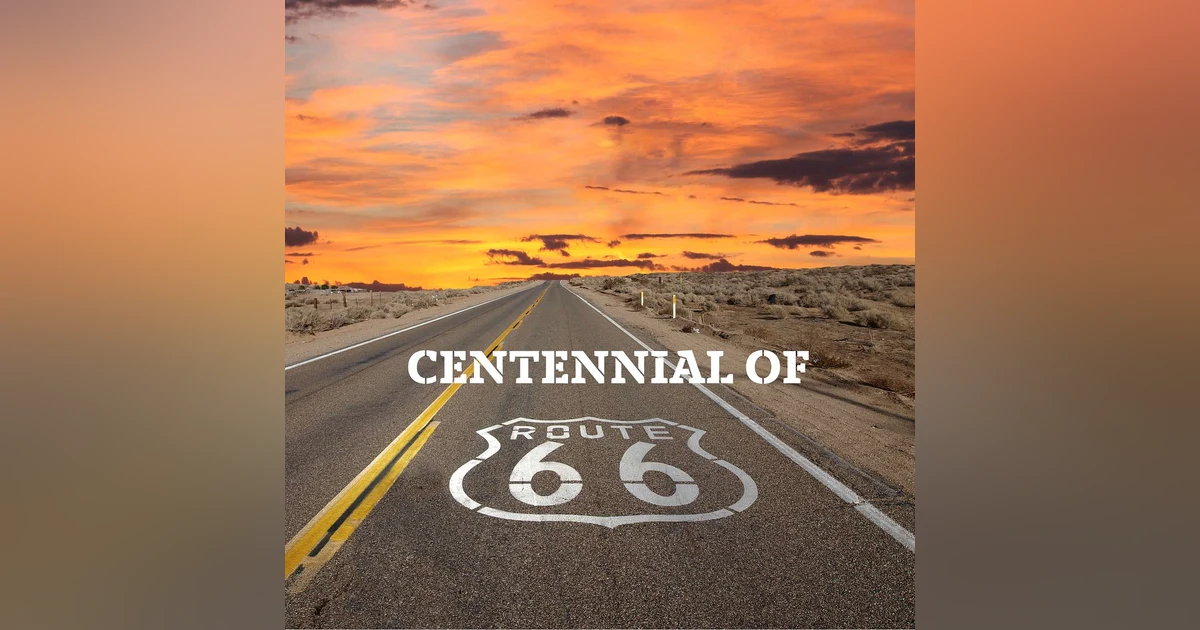

The Route 66 Centennial marks a significant milestone in American history, celebrating 100 years since the establishment of one of the nation’s most iconic highways. Known as the "Mother Road," Route 66 has played a pivotal role in shaping the cultural, economic, and social landscape of the United States. Stretching from Chicago, Illinois, to Santa Monica, California, this legendary route has inspired countless travelers, authors, musicians, and entrepreneurs throughout the years.
As the Route 66 Centennial approaches, communities along the historic highway are preparing a variety of events, festivals, and educational programs to commemorate its legacy. From classic car shows and vintage roadside attractions to art exhibits and historical reenactments, the centennial is more than just a celebration—it's an opportunity to reflect on the profound impact Route 66 has had on American life. The highway’s unique blend of nostalgia and adventure continues to draw tourists from around the world, eager to experience a piece of living history.
The Route 66 Centennial also serves as a reminder of the importance of preservation. Many stretches of the original road and its landmarks have faced threats from modernization and neglect. Efforts by preservationists and local organizations have helped restore and maintain much of the historic route, ensuring that future generations can enjoy its charm and character. The centennial celebrations will highlight these efforts, encouraging continued investment in heritage tourism and community revitalization.
Moreover, the Route 66 Centennial brings people together from all walks of life, united by a shared appreciation for the highway’s enduring spirit. Whether you’re a history buff, a classic car enthusiast, or simply someone who loves a good road trip, the centennial offers something for everyone. As we celebrate 100 years of Route 66, we honor its past, embrace its present, and look forward to the adventures that await on America’s most famous road.
Thanks for listening!
Click the "Send us a Text Message" link above to send us your questions, comments, and feedback on the show! Please make sure you leave the podcast title. Or if you prefer to leave an audio message, leave us a voicemail on our website!
Subscribe to our newsletter to keep up to date on the latest from the show.
Check out our favorite products to use on and off your motorcycle.
Niels:
66 is the path of a people in flight. Refugees from dust and shrinking land. 66 is the mother road, the road of flight. Welcome to the Throttle and Roast podcast. I'm your host, Niel Meersschaert. In today's episode, I'll be looking at the 100th anniversary of the mother road, Route 66, one of the most iconic roads in Americana. It's amazing to realize that this year is a century since it started. And there are celebrations across its entire original path planned for this year. And I'll share some background on Route 66 and some examples of the Centennial celebrations. So let's start with a little bit of the history of Route 66. Now Route 66 was commissioned in 1926. And this was originally intended to connect rural communities with urban centers. And the US highway system was an effort by the federal government to connect these small rural towns, not just major cities. And before US highway system was created, trips that were made along these tiny little dirt roads, dirt paths between all these rural took much, much longer to be able to travel and get to anywhere. And this was originally an effort speed up and connect more of the communities of the United States together in a way that had not been possible in the past. And this was originally a mix, certainly for Route 66 was originally a mix of dirt and gravel roads along with a few disjointed local roads that connected from Chicago, Illinois, all the way out to Santa Monica, California, over roughly 2500 miles. it was the first real effort to link all of these different roads together, adding in some segments that were missing and really give a single path that you could do to really cross a huge swath of the United States. And while it started in 1926 for the beginning of the commissioning of it wasn't fully paved until 1938. So there was a long period of time where parts of Route 66 were still dirt and gravel paths. Now, John Steinbeck immortalized Route 66 as the mother road in The Grapes of Wrath, adding to the cultural zeitgeist surrounding Route 66 and the migration during the Dust Bowl from the middle of the country out west towards California. And in World War II, Route 66 was a major military highway bringing supplies across the country. This made it much easier to bring supplies over to the west coast of the United States and therefore was a part of the war machinery. Now, as we wrapped up the war and there was a huge growth in prosperity that was happening in the United States and road trips became a huge part of that experience. Route 66 was a very highly sought after route. It went through all sorts of small little towns. There was all sorts of diners that were being put up, drive-in theaters, neon lights on the motels, weird attractions sprouted up along its entire path. And these attracted motorists to want to travel along, stop by, spend a little bit of money. And it became an source for a lot of these smaller communities to take advantage of all these motorists who were driving along its length. In fact, the original Pixar film Cars captured a bit of the character of that original spirit, if you will, of Route 66 and looked at it almost with a bit of rose-colored glasses. It looked back and said like, hey, it used to be this great thing, but it had fallen onto harder times. And that really was what happened to Route 66. In the 1960s, after the start of the federal interstate national highways were often ignored by motorists in favor of the interstates, which were even faster. They, instead of following along the path of the terrain, they just cut through it. So they were faster, but they bypassed a lot of these smaller communities. And those faster routes with fewer saved a little bit of time for the motorists. And I think this was really captured in that Pixar film of, hey, it saved 10 minutes. And that's why that small little town was affected, Radiator Springs. But this left, of course, the numerous businesses that were along these original alignments with no revenue, and many of them went under. And in fact, some of these towns that were bypassed actually became ghost towns because of that revenue loss. There was no longer a mechanism for them to sustain any livelihood, and sadly, many of them have gone away. By 1985, of course, Route 66 was officially removed from the US highway there was no longer a continuous, unbroken route along Route 66. Some sections were replaced by interstates or renamed to other highway numbers. But there had been a number of efforts to really preserve the remaining bits, and these are continuing to happen such that travelers can still experience a bit of what the original character of Route 66 was. And today, several of these segments are preserved as the historic Route as a national scenic byway. But this year in 2026 is the 100th anniversary of that original commission road, and there's a huge number of events that are occurring along its remaining sections to both honor and this historic part of Americana. the beauty of this is, it is such a, it's almost like a moment in time for the country and the experience of that westward expansion perhaps is forgotten a little bit about today. so I really do want to highlight as part of this episode, a couple of the things that are there to sort of bring it back into the foreground for a lot of people and remember that experience. For me personally, when I get onto a motorcycle, I prefer to do the back roads. I find it far more interesting than riding on the highway or on the interstate, which to me is quite frankly, very boring to ride. But you get in those back roads, you stop in these small towns, that is what makes it such an interesting experience. And you meet all these interesting characters when you stop into a, let's say a cafe or a diner or something. That to me is part of the fun experience. So Route 66 is fitting into that sort of baseline of how you would do it. And I really think a lot of more people would get more out of their motorcycles if they did get off of the major highways every once in a while and took these back roads,stopped in these small embraced almost the spirit of Route 66. So in that vein, there's a few things that I did want to highlight that might be interesting for you to take a look at. And I'll throw some links in the show notes for you to take a little bit more detail into this. But one of them is a group called Two Lane Life. They're actually riding cross-country and documenting their travels on two Harleys. And so if you'd like to live vicariously with a pair of bikes traveling along the along Route 66, the remaining segments of it, this is definitely for you. Now, several of the episodes following will airing on YouTube. And I'll add a link to their site in the show notes. And sticking with Harleys, of course, Harley Owners Group is one of the largest motorcycle organizations in the United States. And they actually have several rides scheduled this year along portions of the historic Route 66. So definitely take a And see if there's going to be one happening in an area near you. Or even take a trip and go participate in a little bit of it if it's a little bit out of your local area. Now, of course, a lot of travel along the historic Route 66 was not necessarily only on motorcycles. A lot of it was in cars. People used RVs. Of course, people are now starting to use EVs. And so there's a lot of different events that are oriented towards those RVs, the EVs, and even trucks are planned for this year. A great example of this would be even the Detroit Auto Show has a Route 66 exhibit happening this year. So there's just a lot of recognition and celebration how Route 66 had its impact onto the motoring community. And I include motorcycles in that because it is more broadly of that. It's how do we travel by motor vehicle. motorcycles are sort of a unique beast. We're sort of... Physically closer to a horse, but we have the power that you'd have in a car, so I, I think they're a really interesting, interesting mixture. Now, the, the cultural significance of this road has just been captured in several of the events that are planned for this year, including TV series like Travels with Darlie, I mentioned, the Pixar film, Cars, which also kind of captured that spirit of Route 66. There's even a new film that's coming out, a documentary film called Main Street of America. this has screenings in several states that housed the original Route 66, and the screenings are going to be starting in September for that, and I'll add a link to that as well into the show notes. And I'd say, even if you're maybe listening to this episode, and maybe it's a year, two, three, four years from now, whatever it is, don't worry about that, hey, well, I missed the centennial. Well, riding Route 66 is something that you could do any time of the year, even if it's just little segments of it. But there's such a passion for the organizations for maintaining this as a part of our history. I think it's an experience that I think that I think is like no other that one could take advantage of. So I would really say that this and I think the reason why there is just such a desire to maintain this is really the beauty of the power of the memory of Route 66 and its impact onto the world. Is that it has allowed a lot of it to be preserved and allowing you to experience some of it. Now, while the start and end of the route are in fairly busy areas being in Santa Monica, California and in Chicago, Illinois. There's a lot of parts in the middle, especially in Arizona and New Mexico that are well preserved from just the dry air. And it provides this picturesque opportunity to see what it must have been like to ride the mother road in its heyday. And even some of the businesses that have gone under their remnants are still there for you to admire. And because it's so well preserved in that desert air, you can still see a lot of maybe a little bit color fade, but pretty similar to what it would have been like in that time. So let's wrap up. I covered some of the history of Route 66 from the initial commissioning in 1926 to the completion of paving in 1938 and the decline that started happening in the 1960s as US highways like Route 66 were bypassed in favor of interstates. the route was officially discontinued in 1985, but sections live on and the Route 66 Centennial site is a great resource for events around the celebration and a guide for how you might choose to visit parts of the road. Now, plenty of coverage will be available with Main Street of America film and documentaries like two lane life. So it's something I'd really encourage you to explore. My question for you this week is, have you ever ridden on part of Route 66 or are you planning to? Share your thoughts through the Text the Show link in the show notes or leave a voicemail at throttleandroast.com slash voicemail. Thanks for listening. I'll talk to you next week.
