

 Apple Podcasts
 Spotify
 iHeartRadio
 Podcast Addict
 Amazon Music
 Podchaser
 Castro
 Castbox
 PocketCasts
 Deezer
 PlayerFM
 Goodpods
  RSS Feed
 Modern Motorcycles: Have We Traded Soul for Screens and Tech?
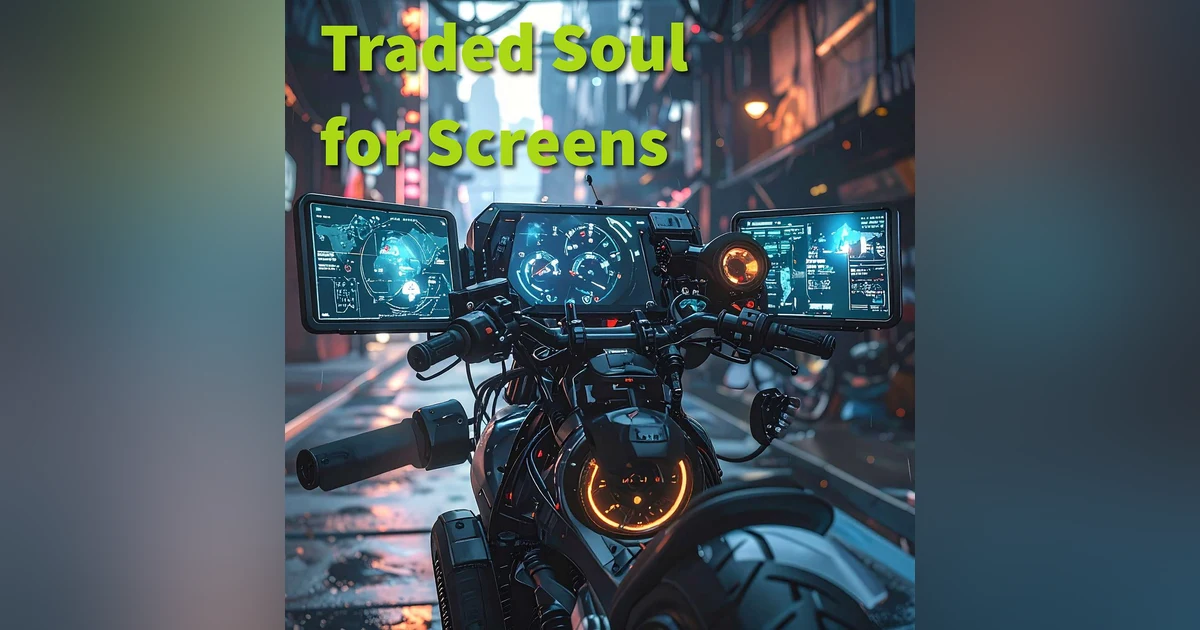
In this episode, we dive deep into the evolution of motorcycles, exploring whether the industry has traded soul for screens in pursuit of technological advancement. The conversation begins with a look at the essence of motorcycling: the raw connection between rider and machine that has defined the sport for decades. We examine how this connection is being challenged as digital dashboards, ride modes, and electronic aids become more prevalent, prompting enthusiasts to question if something fundamental is being lost in the process.
Throughout the episode, we reflect on the growing presence of technology in motorcycles. We weigh the benefits—such as improved safety, enhanced performance, and the ability to customize rides to individual preferences—but also consider the diminishing simplicity and character that once made motorcycles unique. Personal stories about the tactile feedback of carbureted engines, the thrill of manual tuning, and the sense of mastery that came from learning a machine’s quirks are contrasted with the seamless, sometimes sterile, feel of modern bikes.
We also consider the cultural shift within the motorcycle community. As new riders enter the scene, many are drawn to the convenience and connectivity that modern bikes offer, from smartphone integration to GPS navigation. The discussion touches on the generational divide: are younger enthusiasts missing out on the soulful aspects of riding, or are they redefining what soul means for a new era?
Finally, the episode explores whether it’s possible to strike a balance between embracing innovation and preserving the elements that make motorcycling special. We examine how manufacturers are responding to these concerns, introducing retro-inspired models and customizable features that aim to satisfy both tech-savvy and traditional riders. The episode concludes with a reflection on the future of motorcycles and what it means to truly ride with soul in an increasingly digital world.
Thanks for listening!
Click the "Send us a Text Message" link above to send us your questions, comments, and feedback on the show! Please make sure you leave the podcast title. Or if you prefer to leave an audio message, leave us a voicemail on our website!
Subscribe to our newsletter to keep up to date on the latest from the show.
Check out our favorite products to use on and off your motorcycle.
00:00 - Introduction
00:48 - Digital Seperation from the Road
04:22 - Interface Rage & Safety Irony
06:15 - The Threat to the Rider's Code
09:59 - Some riders are pushing back
11:18 - Wrap Up
It has become appallingly obvious that our technology has exceeded our humanity. Welcome to the Throttle and Rose Podcast. I'm your host, Niels Meersschaert. There's an irony that as motorcycles get faster, safer, and perhaps even smarter, they're losing their soul. Modern bikes are more complex than ever before, and flagship motorcycles have digital convenience, but give up mechanical character and even the ease of working on your own bike at home. In this episode, I'll examine the question, did we buy motorcycles to escape our screens or just to bolt a smaller one to our handlebars? So I'm going to start with a couple of the things that are issues that modern bikes have that may take away the riding experience. And the first sort of group I want to talk about is really this digital separation from the road. So if you think of it, when you're getting out onto a modern bike, you miss a little bit of the tactile feedback that we're used to. We've got a ride-by-wire throttle. And while this has some benefits to it, the downside is it almost smooths out a lot of the engine character that might have been there beforehand. And as a things that you would have had a little bit of feedback into is missing. since you no longer have that sort of cam in place with cable that you would have in a normal throttle, you lack a little bit of that feedback of, hey, the pressure starts to feel a little bit more. It's basically linear today, at least the feedback in your wrist. And so you miss a little bit of that tactile feedback. I'd say actually the same thing happens with electronic suspension. When you were riding and you had the bike was hitting a bump or you felt the imperfections in the road, what happens is you know what's happening. You know that you need to adjust because you know the surface is not as smooth or has as much traction as it would otherwise. But the electronic suspension is almost numbing this feeling coming back to you. It's smoothed it out so completely much that you no longer have the feel. one can argue that it gives better performance. It's going to give you more traction. But you do miss that tactile feedback. riders will sometimes say is holding them back a little bit. It's something that they're feeling is missing from that experience. Another area would be really when you think of your skills versus the algorithms. We have inertial measurement units. They could be six axis units. And these are controlling lean angle traction, cornering ABS. It's a technological powerhouse and amazing stuff that you can happen. But do the algorithms save you from mistakes or do they rob you from the rewards of gaining new skills that can make your riding even more meaningful? If you never learn that, hey, if you hit the throttle way too much, the rear end is going to slide out on you. And this is that edge of where you need to be to keep it from doing. So on this traction, in this gear, on this bike, in these temperatures, et cetera. Well, if the computer is doing it all for you, you never learn. The bike is kind of doing it for you. And this is something that does hold back some riders. And I want to hit on a little bit of something that happens even in modern cars. And this has been a gripe of people who were driving enthusiasts. A lot of modern sports cars have electric steering. So there's pretty much no effort to steer the car, no matter how fast you're going. And older cars with manual steering often made you feel fast because you got that feedback pushing into the, into the wheels. If you were trying to make a corner and it was a very fast corner, it would push on that wheel even harder and try to make it to go straight. So you had to hold on even harder. And this was something that created the experience of feeling that you were going faster than you were because you had that tactile, physical feedback into hands as you're driving. And we lose that with a lot of the modern sort of digital separation from the road. And the next grouping I want to talk about is really almost like a, an interface rage and, and the irony of safety. You know, a lot of cars have been moving in this direction for a while where they're replacing physical buttons with touchscreens. And while software does allow manufacturers to easily change interfaces without the difficulty of physical button changes. The concern is if it starts raining and I have to dive three menus deep to turn on the windshield wipers. Is that the right balance? And now we're getting into a similar issue on motorcycles. We have to navigate through several screens to turn on the heated grips rather than having a dedicated button right on the handlebar. And so is this really the right approach? Yes, you can have a lot of functionality. You don't have to change a lot of or physical button on the bike. You can just do it through menus and it feels like that makes sense, but you're riding. You don't want to be sitting here fiddling with menus to try to get to, oh, I want to turn on the heated grips. Just give me a damn heated grip button. Make it easy on me. I know the problem with having touch screen and visual interfaces on bikes today is your distractions are really on full. I mean, Spinal Tap, the movie famously said, but this one goes to 11 and TFT displays with tons of rider notifications, even from your phone, moving maps, music, everything possible to pull focus away from the road is happening on the screen. And remember every time that our eyes come off of the road, it's a chance to miss that car pulling out or that deer lurking in the woods. And so, yes, it's great that you've turned it all up to 11. We've got all these different things that jamming down on us, but isn't that why we went out on a ride? Cause we wanted to escape all of that constant notification. Why do I want that on my bike? Another area of why some riders are really pushing back on some of these modern motorcycles is almost a threat to the rider's code. You know, one of the things that we used to do in the past is we had a lot of self-reliance in the past. Bikes were mechanically simple. If we had an issue, we could often repair it right on the side of the road, but with the electronics managing the engine, the suspension, or even just our speedometer and tachometer are now digitally rendered. What can you do when an electronic gremlin strikes? You know, with the old bikes, we used to be able to MacGyver a solution on the side of the road with a screwdriver and zip ties. But that doesn't work for a CAN bus glitch or a firmware bug or a tiny fried conductor on a circuit board. So how do you repair a bike that is more a computer than a mechanical device? And so this lack of self-reliance means that for many riders, they don't trust the bike or they don't trust their ability to get the bike moving again if it has an issue. Being closely related into that is suppose that you're out on a wonderful ride in the backcountry. You're winding up and down the hills, you're going around the corners, and you're just enjoying everything about that experience. And now a wheel speed sensor has an error. It's not really a mechanical issue, but something within the sensor is just not reading the speed of the wheel correctly. And your bike, in its infinite wisdom, has decided that the bike is now unrideable because it cannot calculate the needs, or it can't manage traction control. It can't see that one wheel is moving faster than the other, so you're stuck on the side of the road. Now on an old bike, we'd simply say, fine, I don't have ABS. I'll just have to slow down the old-fashioned way. Or traction control doesn't work. Well, I'll just keep my right wrist in check and not hit the throttle so hard. But no, the bike doesn't trust you as the rider anymore, so you're trying to reach roadside assistance in an area with no cell coverage. And this is another reason why there are so many people who are really pushing back against the overly complicated modern motorcycles. Another big issue in here is really about planned obsolescence. Now, there are drivers who still take a Model T out for a Sunday drive. Likewise, plenty of riders cling on to their older bikes. And some manufacturers have actually been really great about still producing parts for bikes 50 years old. But with new bikes, what happens in 10 to 15 years when the screen burns out? What happens when the app that connected to your bike to adjust things is no longer updated and won't run on the latest phone? The new version supports the new bikes, but your old bike is left out in the cold So now your bike is stuck. It's a useless paperweight that you can't even work with. And this is something that's not just about motorcycles, I think. But we have the longevity of products is far shorter than it was in the past. Even though the products are more expensive than they used to be. So you're paying more for a product that won't last as long. And that's giving a lot of people pause, especially as all of these new features and everything are jammed into the flagship models of motorcycles. They aren't necessarily making the motorcycle better. They're not necessarily making the motorcycle last longer. making the last less long. You won't be able to repair the bike in a while. It's more complicated. And now you've spent a lot more money on a bike that you aren't going to be able to keep for all that long. And so some riders are actually pushing back against this. Now all these issues aren't really about being a Luddite. And while many of the systems can be quite capable, sometimes there's an honesty in a simple machine. my day job is working in software development, so I stare at screens all day long. Sometimes you just want a break. You want that mechanical simplicity. You want to be completely disconnected, not reachable at every moment. Remember the days before cell phones when people had to call your house and realize, oh, you weren't home. And they would have to just try again later. Or maybe sometimes you actually had one of those answering machines and they could leave a message. And then maybe sort of kind of later you might listen to it and then get back to them. The truth is, sometimes we want to escape the always-on hyper-connected world and hop on the bike and just smell the freshly cut grass in the fields we pass by. And listen to the soundtrack of the engine as the RPMs rise and fall with the terrain. And so many riders, even those who aren't beginners, are turning to these smaller, cheaper, non-flagship models that embrace because it is cheaper. But the riders who choose them feel they're even getting more value than these flagship bikes. Because these bikes still have soul. for you this week is, are you in Camp Retro or in Camp Modern when it comes to bikes? Share your thoughts through the text to show link in the show notes or leave a voicemail at throttleandroast.com slash voicemail. Thanks for listening. I'll talk to you next week.
